The Second Founding of the University of the South
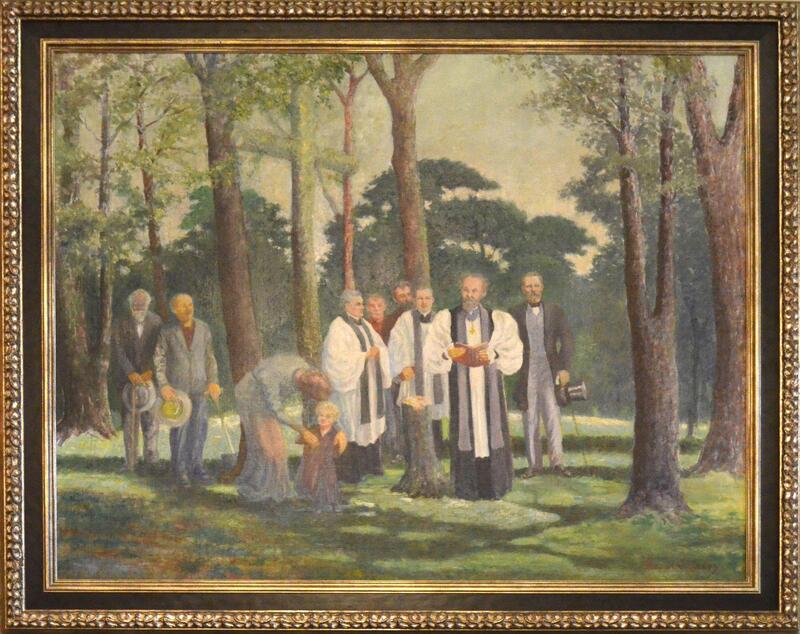
Although chartered by the State of Tennessee in 1858 and its cornerstone laid in 1860, the University of the South did not open its doors to students until after the Civil War in 1868. Historians of the University refer to the post-war events leading up to the actual matriculation of students as the "second founding." This painting of a signal event in 1866 of the Second Founding was produced and donated to the institution some seventy years later in 1938. Today it hangs above the fireplace in the entryway to the largest event space of the Sewanee Inn. The artist, the Episcopal priest Thomas J. Crosby, composed it in a way that presents the foundation of the second University of the South as a hierarchical, but harmonious social order, led by white, educated clergymen, and followed by their deferential subordinates (women, children, and Black men). This page examines some of the details of Crosby's work from 1938 and its historical context.
Painting Details
The Clergy
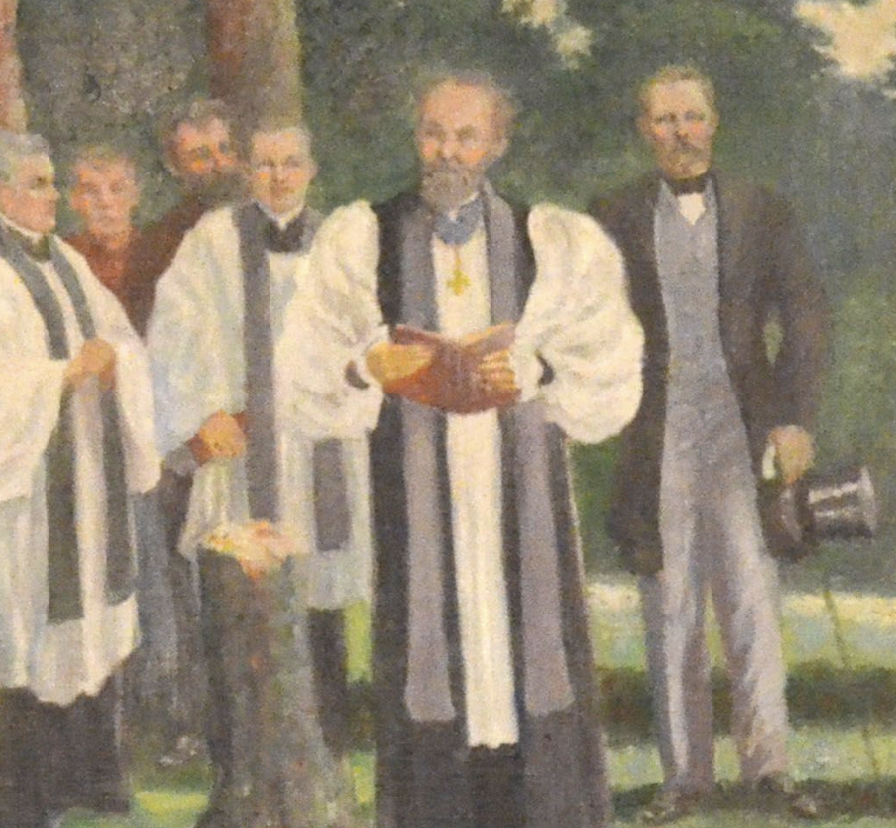
The most prominent figure in Crosby's painting is the Episcopal Bishop of Tennessee, Charles Todd Quintard, who is placed ahead of everyone else, facing the viewer head-on. Quintard was a critical figure in relaunching the University of the South after the Civil War. Quintard served as a Confederate chaplain during the war and had been closely associated with Tennessee's first Episcopal bishop, James Hervey Otey. By 1866, when the event depicted here happened on the land of Sewanee's "Domain," Quintard had already been in discussions for over a year with fellow Episcopalians George Fairbanks and David Pise about "re-founding" the University of the South. His presence at the service shown here was the result of clerical negotiations that made him the second Bishop of Tennessee and of a campaign to see the construction of the new Southern university through to completion. A year later, in 1867, he was named Vice-Chancellor — equivalent to the position of president — of the University of the South. Quintard's prominence in the painting reinforces his legacy as an honored, important figure in Sewanee's history — a veteran of the Confederate miliatary, a leader of the University's "second founding," and a Vice-Chancellor who invested time and energy into initiatives that were valuable to the remains of the plantation class after the Civil War.
The Cross
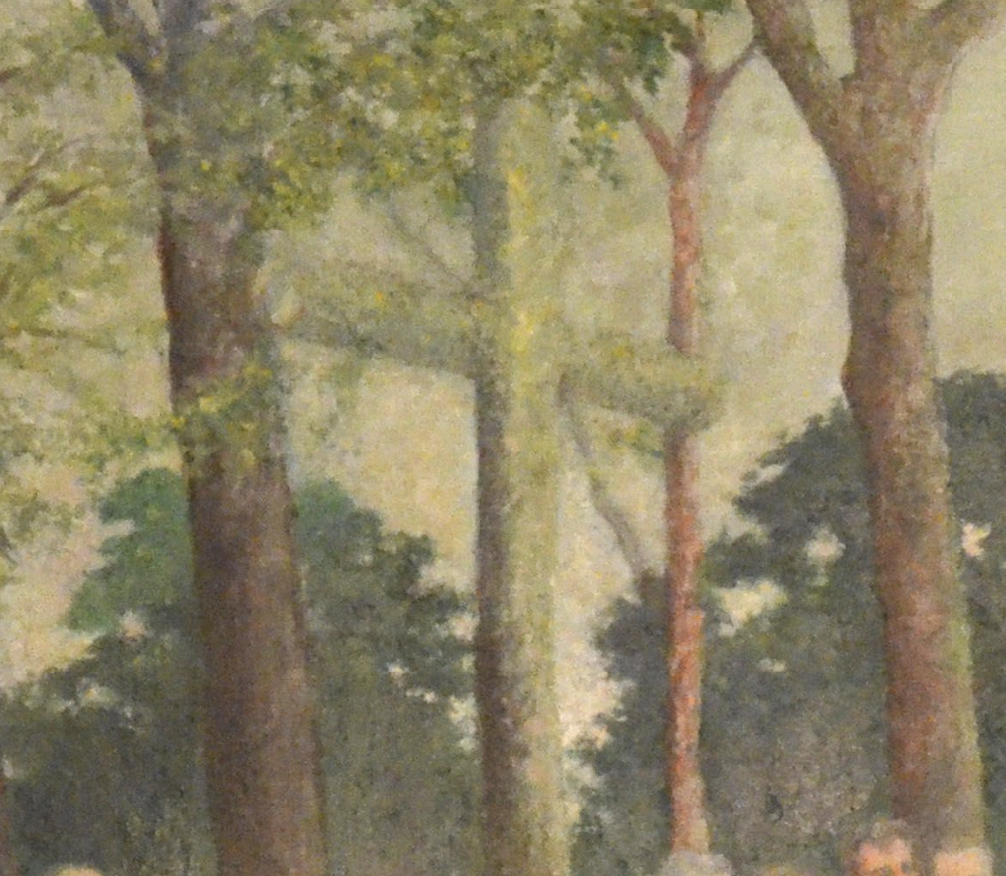
The rugged, rustic quality of the wooden cross tucked among the trees in Crosby's painting of the "Second Founding" is an important element of the scene depicted. Much of the legend around the "Second Founding," which revived the Episcopal support of a Southern university and saw the first students matriculate in 1868, is rooted in the belief that the founders of the University transformed wilderness into a fruitful enterprise. The "untamed" beauty of the Cumberland Plateau, and Sewanee's subsequent establishment upon it, is a concise representation of the well-documented desire by the original founders to create an institution that sustained the economic power of enslaved-labor agriculture and the cultural power of the Southern aristocracy. By depicting how they hewed and constructed a cross from a tree to mark the re-establishment of the institution, Crosby constructs a vision of an environmental hierarchy: white, Christian, Southern men claiming the land as their own.
The Laborers
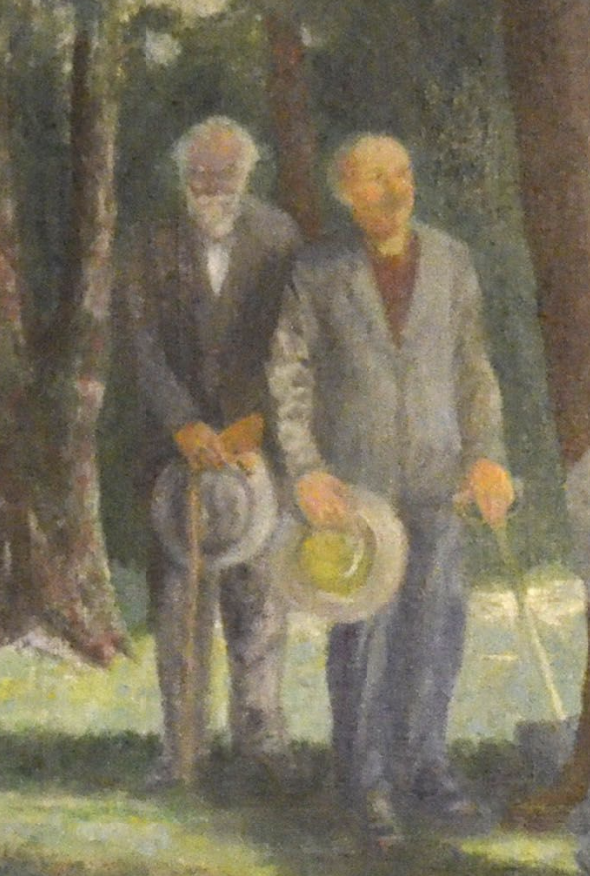
The two figures in the back of Crosby's painting are obscure in relation to Bishop Quintard and his fellow clergymen closer to the foreground. The colors used are less vibrant, the faces less distinct, and their posture bent towards the Bishop and the cross. It is likely that Crosby meant for them to represent the hired labor who built the first homes and cabins on the land that became the University of the South. One of the most important architects of the planned university, the Florida plantation owner George Fairbanks, recorded his first-hand recollection of the service that Crosby depicted. Fairbanks, who appears in the painting dressed in his Confederate uniform, described a crowd of laborers joining the officials at the cross while they sang hymns. The Sewanee Magazine published an article in the summer of 2016 outlining the history of the Second Founding and it mentions, too, the presence of at least three dozen local laborers, some white and some Black, at the time of the Second Founding service. The stylistic choice, here, is to omit almost all of those dozens, and instead show only two (possibly four; the two men in red behind the clergymen may also be laborers). One white man, one Black man, dressed similarly, grouped away from the "second" founders. They are anonymous and symbolic — there because of the service they have rendered, not who they are as individual persons. The presence of the Black man was a fixation of the student newspaper when Crosby delivered the painting to Sewanee in 1938. The Sewanee Purple asked Crosby about the "darky." Crosby explained that he placed him in the painting because "there was never an important ceremony in the South without one [Black man]." The inclusion of the Black figure in the portrait, then, was more scenic than a reflection of the historical record. It may have been a political choice on Crosby's part, one that affirmed the benevolence of the University's social order and the Black race's deference to the paternalistic white supremacy of the post-emancipation South represented by the Episcopal university.
The Woman and Child
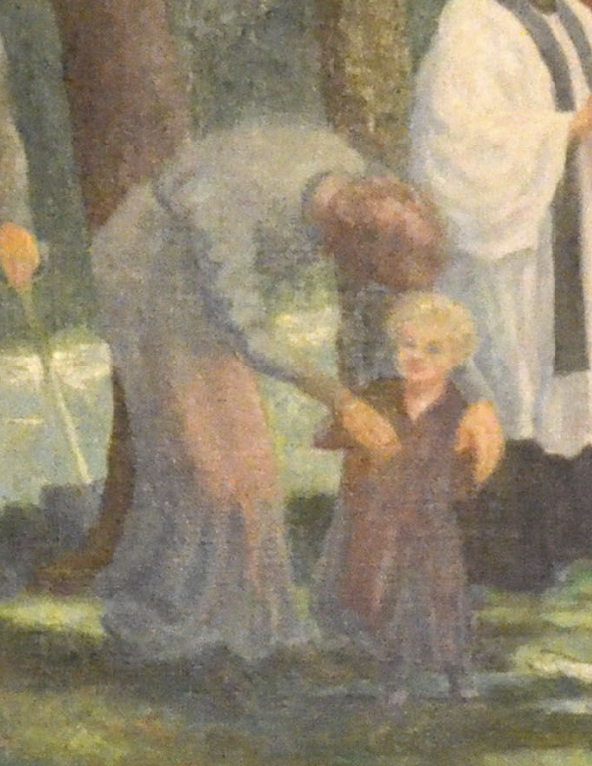
Crosby added the woman and child in The Second Founding, according to the same article from the Sewanee Purple in 1938, to lend a sense of "harmony to the composition." Like the two laborers behind them, the woman and child were strategic additions — though with less specificity, perhaps, than the Black man, whose role in the painting is specific. Still, there is a role for the woman and child to play. That they were the two figures added to enhance the "harmony" of the painting is telling; it was not more natural beauty, or flora or fauna. In the eyes of a painter steeped in the myth of the twentieth-century Lost Cause, a white woman and a white child may have indicated the strength of the cause for white supremacy passed on to future generations through the instruments of the University's teachings.
Use the following links to proceed to the painting of the Audubon Gallery, to return to the Down the Hallway page or the Decorating with the Lost Cause introduction.