Decorating with the Lost Cause
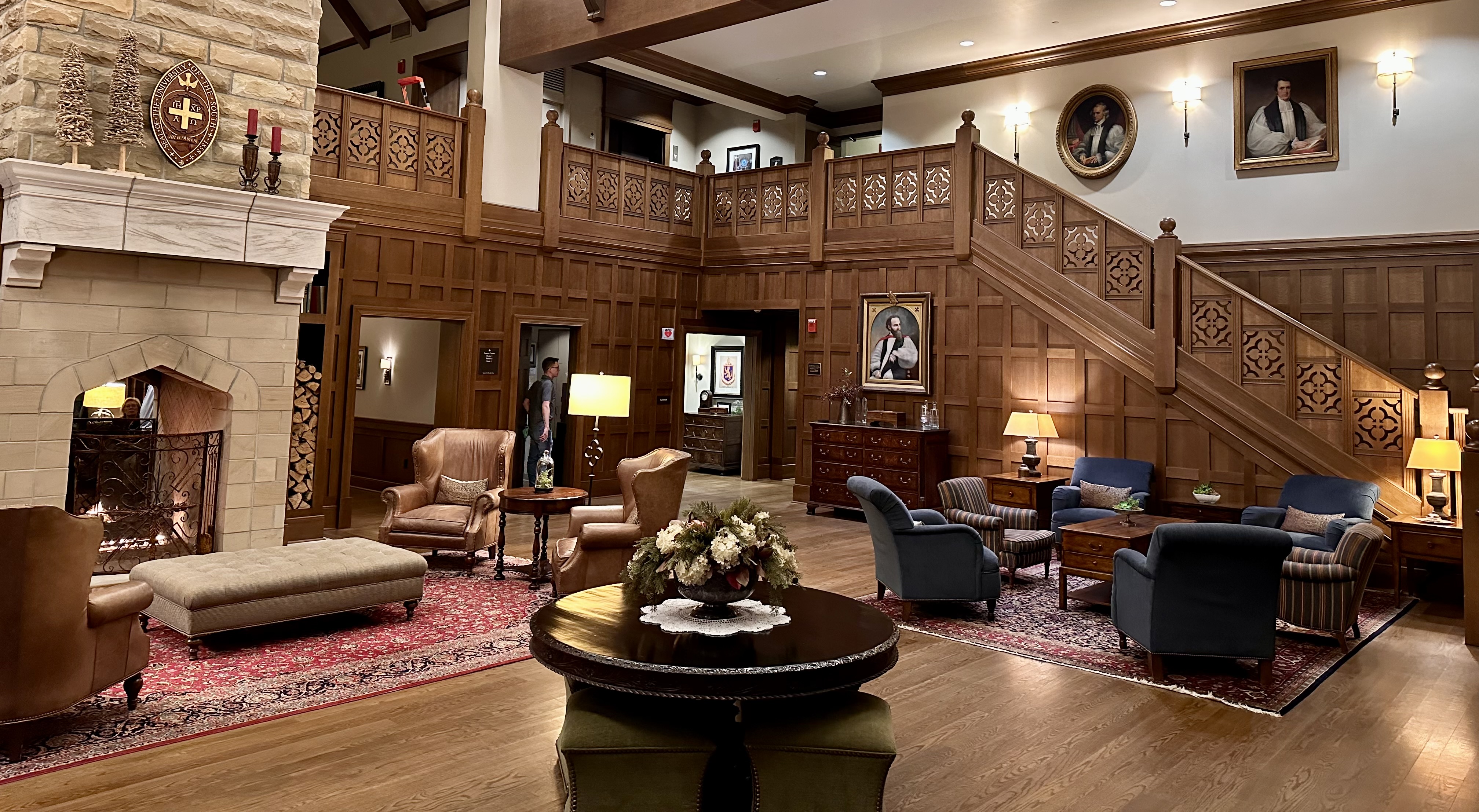
The Art of the Sewanee Inn
The Sewanee Inn, which opened in 2014, is a gracious hostelry that welcomes visitors to the campus of the University of the South in Sewanee, Tennessee. Its comfortable furniture, cathedral ceiling, expensive wood paneling, and massive fireplace open on both sides: All lend the ambience of a historic and rustic mountain lodge. The Inn, which is advertised as Sewanee’s "living room," is a venue for conferences, colloquiums, and workshops. It is where many academic guests are taken, whether for lodging, drinks, or dinner. The Inn is the first place where parents will try to stay during Family Weekend, and students order their first legal drink.
But the Sewanee Inn also tells an incomplete and misleading story of the University of the South through its display of original historic portraits and reproductions of landscape paintings, photographs, and other artistic objects in the University's collections. That story nostalgically roots the origins of the University in the ancient days of the Old South by prominently displaying the likenesses of figures who were leaders in founding the University of the South in the late 1850s and in defending the institution and practice of human bondage.
By presenting these artifacts without reference to the slavery-based social, political, and religious order that produced them and is represented in them, the Sewanee Inn becomes an unintended but de facto shrine to the “Lost Cause.”
That phrase — the Lost Cause — asserts, according to Yale historian David Blight, “an interpretation of the American Civil War viewed by most historians as a myth that attempts to preserve the honor of the South by casting the Confederate defeat in the best possible light.” The Lost Cause, Blight continues, “attributes the loss to the overwhelming Union advantage in manpower and resources, nostalgically celebrates an antebellum South of supposedly benevolent slave owners and contented enslaved people, and it downplays or altogether ignores slavery as the cause of war.”
The information accompanying the artifacts arrayed on the walls of the Sewanee Inn — from the charming Audubon bird prints lining its main corridor to the framed composite of the former Confederates on its faculty that adorns the wall of the men’s restroom — are silent on their contextual origins in slavery and the Civil War. Silence, in this case, speaks loudly. Without this contextual explanation, the Sewanee Inn nostalgically celebrates the antebellum South and downplays the role of slavery in causing both the founding of the University of the South and the Civil War. The history of the University they present is inaccurate and misleading.
“Decorating with the Lost Cause” draws attention to the incompleteness and fills in the blanks of the history told by the portraits and other objects that adorn the Sewanee Inn. You will find, in each virtual page of this exhibit, stories of the works themselves and the context that links them all together. It offers a virtual tour of the rooms in the Inn. As you explore each space, consider why all of us at Sewanee — faculty, students, staff, parents, alumni — would accept the Inn’s fragmentary story about the founders and their supporters. What narratives does the Inn conjure in our minds by its exclusion of stories, not only of Civil War and slavery, but also of courageous instances of desegregation and integration? Who benefits from the stories told in this way? And how can we take the initiative to tell a more complete and inclusive truth?
Origins of the Exhibit
The origins of this web exhibit date to February and March 2024, when the undergraduate students in History 328: Slavery, Race, and the University undertook an assignment to inventory the artifacts in the Sewanee Inn that reference the pre-Civil War origins of the University of the South but without connecting the men depicted or represented to the defense of slavery and the Confederacy. Elizabeth Baker, C’27, a student in that course, conducted extensive additional research that is the basis of “Decorating with the Lost Cause.” The exhibit is a feature of the Locating Slavery’s Legacies database, an intercollegiate project of Sewanee’s Roberson Project on Slavery, Race, and Reconciliation. She was assisted in adding to the LSL database by Dr. Woody Register, Director of the Roberson Project, and Dr. Anna Foy, Visiting Assistant Professor of English and lead administrator of the database.
Tour the Inn
First Floor
Second Floor