The Lobby: Portraits of the Founders
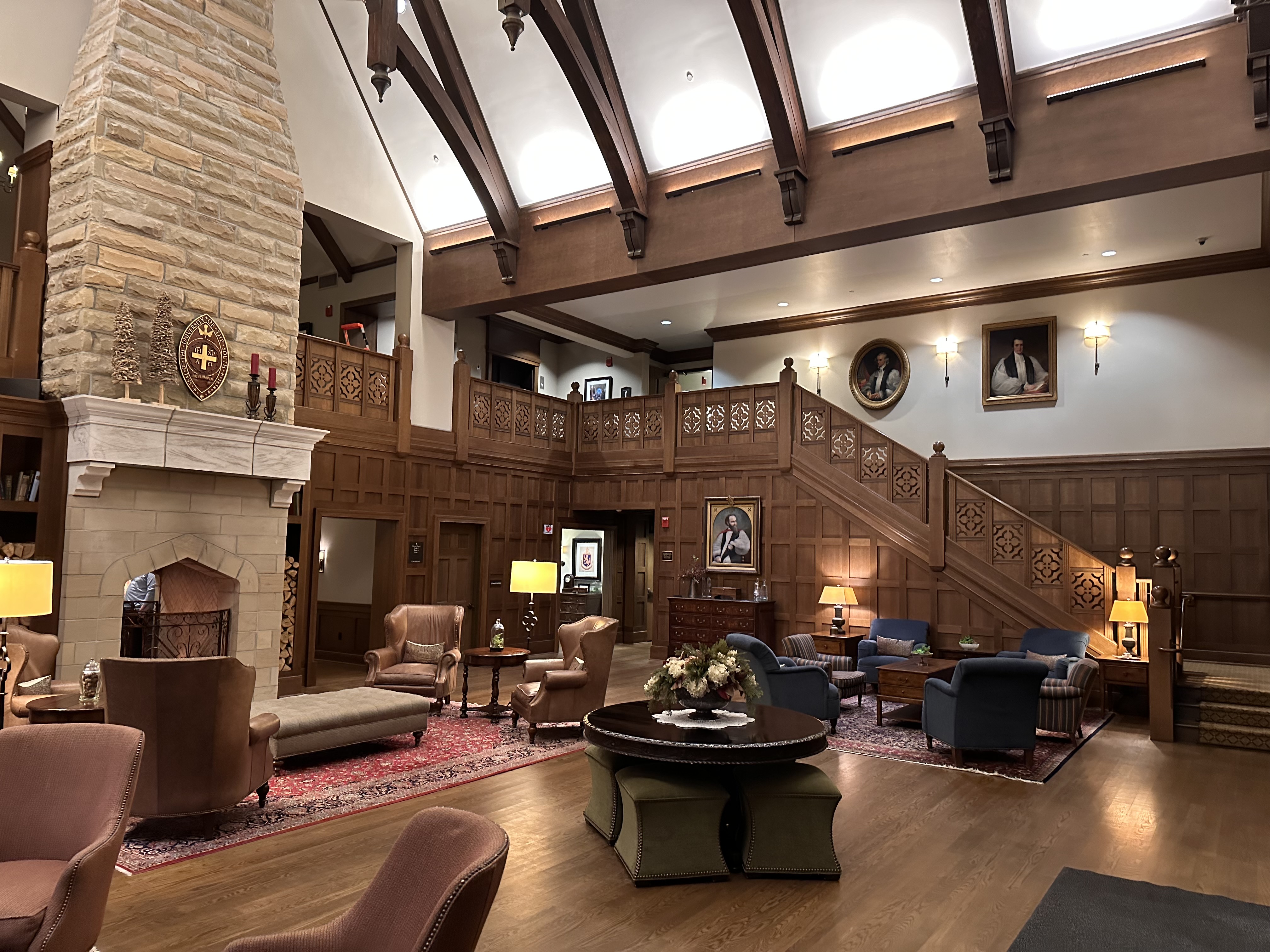
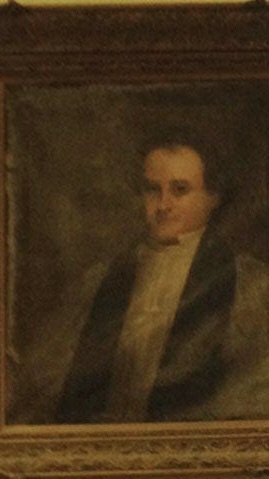
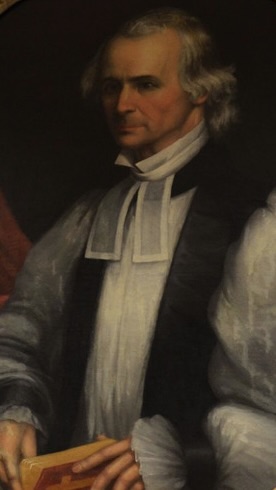
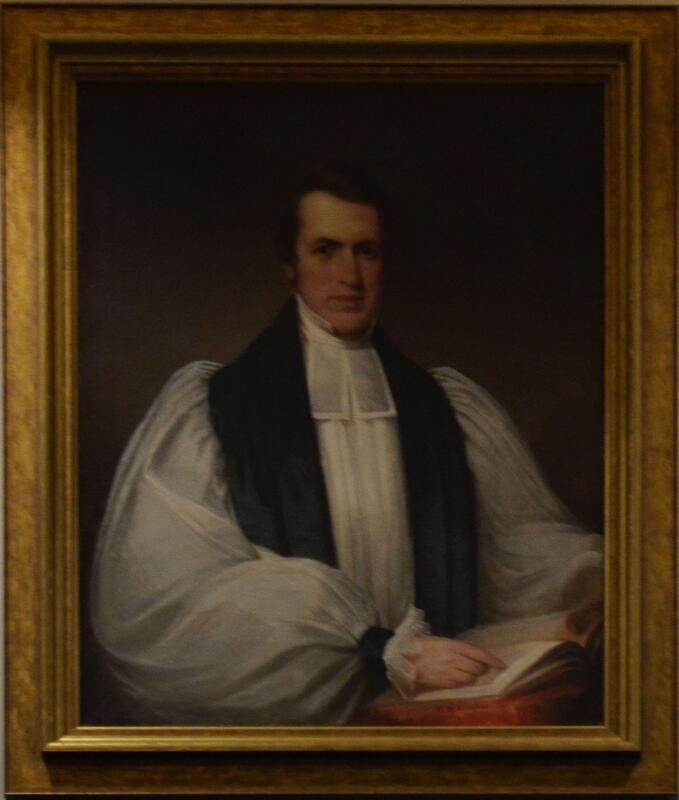
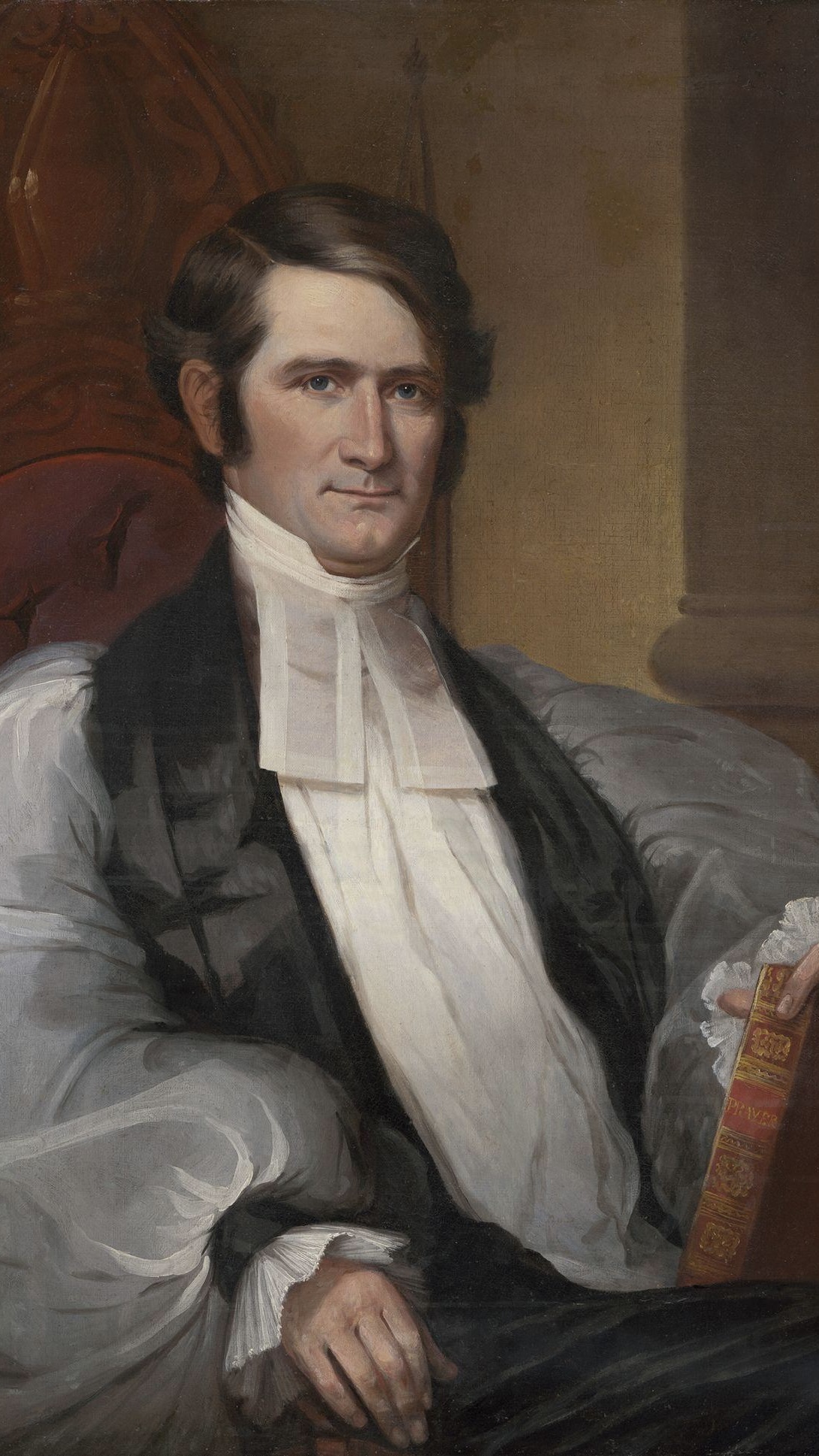
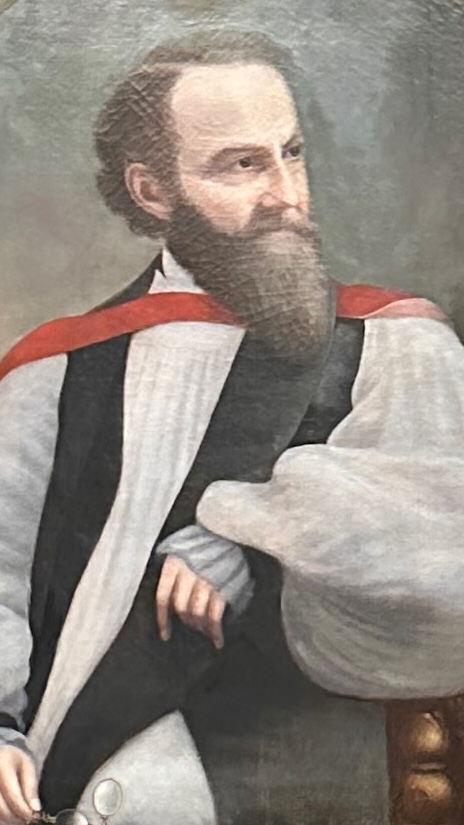
The Lobby is the grand welcoming space to the Sewanee Inn and displays five portraits of Episcopal bishops who were most important in the first era of the University of the South. Four are hung on high in the Lobby and one, that of the second Episcopal Bishop of Tennessee, Charles Todd Quintard, is at ground level.
These portraits of five of the founding bishops of the University of the South implicitly celebrate the inauguration of the University as an institution of the southern Episcopal Church. But presented with only the scantiest of information identifying the subject portrayed and the artist’s name, they tell only a fraction of the story of Sewanee’s founding era. These men led the campaign to invent the University during its pre-Civil War fund-raising stage, highlighted by the symbolic cornerstone laying in October 1860, by which point more than $1 million had been pledged to this cause. But to amass these funds for the University of the South, they successfully appealed to some 300 of the region’s most powerful and wealthy planters and Episcopalians, who themselves enslaved more than 40,000 people — that is, one percent of the American economy’s largest single financial asset.
The bishops appealed for a mighty educational institution to strengthen the social, political, economic, and religious foundation of the region from North Carolina to the far western edges of Texas. They affectionately called this region “the land of the sun and the slave.” Jefferson Buford, an Alabama lawyer known in 1860 for organizing a pro-slavery colony in the Kansas Territory, hailed “‘The University of the South’!” as “An idea of consequence incalculable! May God prosper it; and make us wise & diligent in fortifying our civilization against the assaults of its enemies.”
Without comment or context, the presence of these Episcopal bishops and other representatives of the antebellum social order of the South on the walls of the Sewanee Inn evokes in the viewer a sense of awe and respect for their pioneering efforts to build the new Episcopal Church university, but without reference to the violent political divisions that were both pretext and context to their campaign. Presented in this way, the images reveal nothing of the men’s rallying against the “enemies” of their civilization, of their devotion to the Confederacy, or of their belief that slavery was a divinely appointed positive good for the American nation and the people held in bondage.
Silence on this context effectively does the work of the Lost Cause myth: It sidelines the men’s intimate associations with slavery, secession, and rebellion as immaterial to the educational and religious cause they championed. It also portrays the University’s ancient lineage as apart from the pro-slavery cause — the cause that was at the core of their plans and aspirations for the southern university and the civilization it would support. When the most important founder of the University, the Rt. Rev. Leonidas Polk, Bishop of Louisiana, accepted an appointment to the Confederate military and took command of his forces in 1861, he explained that he was fighting, “above all,” for the preservation of slavery. (Polk, both a priest and a cotton and sugar planter by trade, claimed ownership of more than 400 people over the course of his life.)
We, of the Confederate States, are the last bulwarks of civil and religious liberty; we fight for our hearthstones and our altars; above all, we fight for a race that has been, by Divine Providence, entrusted to our most sacred keeping. When I accept a commission in the Confederate Army, therefore, I not only perform the duties of a good citizen, but contend for the principles which lie at the foundation of our social, political and religious polity.
Click on a portrait to learn more about the work of art and the person portrayed.
Use the following links to proceed to the Decorating with the Lost Cause introduction.