Yerkes National Primate Research Center
Item
- Legacies Classification
- Memorial Type
- Memorial Context
- Memorialized Subject
- Title
- Background and Context
- Physical Description
- Creator/Participating Person(s)
- Date created, installed or dedicated
- Date Modified
- Historical Period
- Funded by
- Location: Institution, City, State
- Learn More About this Subject
- Tags
-
Memorial Structure
-
Academic Facility
-
Dr. Robert Yerkes
-
Yerkes National Primate Research Center
-
Dr. Robert Yerkes (1876–1956) was a post-emancipation defender of racial hierarchies through his research in intelligence ranking among lines of race, gender, and state of origin. His research titled “Eugenic Bearing of Measurements of Intelligence in the United States Army” in the Eugenics Review specifically investigates intelligence testing among military service members of varied racial and ethnic backgrounds to determine their recruitment level and capacity for supervisory positions. His research also informed immigration policy in the US by asserting superior “states of origin” Dr. Yerkes’ work specifically justified the unequal treatment of black persons in access to military training and education, advancing white nationalist hierarchies over non-white immigrants. Beyond the legacy of black enslavement, Yerkes further justified sterilization laws of immigrant women in/around US border protections.
Yerkes National Primate Research Center (YNPRC) was originally named Yale Laboratories for Primate Biology and founded in Orange Park, Florida. It became associated with Yale University in 1930. Dr. Robert Yerkes applied for and received lab funding from Yale University, the National Institute of Health, and the Rockefeller Foundation. It was named after Dr. Yerkes after his retirement in 1941. Emory University received NIH funding to transfer YNPRC ownership from Yale to Emory University. The center was relocated with NIH funding in 1965 to Lawrenceville, Georgia. In 2004, the YNPRC expanded closee to Emory’s campus where it still operates today as laboratory spaces for neuroscience research. The YNPRC was renamed “Emory National Primate Research Center” (ENPRC) June 1, 2022 by Emory President Gregory Fenves following calls from the University Committee on Naming Honors in 2020. This committee convened to reevaluate the names of several on-campus buildings memorializing supporters of slavery in the American south.
-
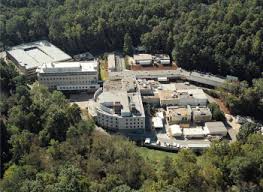
The Emory National Primate Research Center now maintains two locations. The first was in Lawrenceville, Georgia. This center covered 117 acres and housed over 2500 apes for primate behavioral research. The second and main research center is on Emory’s main campus covering 25 acres, maintaining 1000 acres for biomedical research. This center is comprised of multiple buildings made of stone and cement with big windows in the forward-facing walls.
-
Yerkes, Robert
-
1965
-
1941
-
1965
-
2004
-
2022
-
National Institute of Health.
Position: 423 (138 views)