2000-Present: Memorialization in the Era of Universities Studying Slavery and the Black Lives Matter Movement
Item
- Title
- Description
-
2000-Present: Memorialization in the Era of Universities Studying Slavery and the Black Lives Matter Movement
-
This timeline designation enables the temporal indexing of actions in the period when movements to remove or preserve Confederate memorials in public spaces gained traction, universities began examining their own complicity in slavery, and new groups, best indicated by the #BlackLivesMatter movement, gained public support and influence in the wake of highly publicized police and vigilante violence against Black Americans. These actions include protests and campaigns to preserve or remove memorials, monuments, or other objects and places to persons who were active in education, politics, or other arenas of public action and who contributed through their actions to the promotion of the Lost Cause and white supremacy.
This period corresponds to a number of important events and developments associated with the “new” Civil Rights Movement of the twenty-first century. In 2003, Dr. Ruth J. Simmons, president of Brown University and the first African American to lead an Ivy League university, announced the formation of a Steering Committee to investigate Brown’s relationship to the slave trade. Three years later, the committee reported Brown’s deep ties to slavery and slavery’s invaluable contributions to Brown’s affluence and status: “there is no question that many of the assets that underwrote the University’s creation and growth derived, directly and indirectly, from slavery.” The Brown study encouraged other major American universities – Emory, William and Mary, Virginia, and eventually many others – to undertake similar studies. These efforts were reinforced in 2013 by the publication of Dr. Craig Steven Wilder’s Ebony and Ivy, the first major work of scholarship to investigate and expose American higher education’s indebtedness to slavery. The next year and led by UVA, a consortium of these schools organized as Universities Studying Slavery. Today more than forty institutions in the United States, Canada, England, and Scotland are members.
More than a stirring of conscience on college campuses, the USS movement was fueled by the powerful political movements stirred by police and vigilante violence against Black Americans over the last two decades. The roots of these movements date back at least to the police beating of Rodney King in 1992, captured on video for all the world to see. The vigilante killing of Black teenager Trayvon Martin in 2012 as he walked through a residential Florida neighborhood and the exoneration of his killer, George Zimmerman, who claimed self-defense, set off an international movement around the slogan #BlackLivesMatter, which gained force and public acceptance (and generated a variety of counter movements) as more killings of Black adults and teens were caught on video and publicized. The culmination of these exposures of police violence was the murder of George Floyd in 2020 and subsequent conviction of the officer who murdered him, and the conviction in January 2022 of two white vigilantes who gunned down Ahmaud Arbery as he jogged through a small-town Georgia neighborhood in 2020. At the same time, extraordinary anti-Black violence, including a white supremacist’s massacre of nine Black people at Mother Emanuel African Methodist Episcopal Church in Charleston, S.C., in June 2015, brought new attention to the place of Confederate memorials in American public spaces. Soon thereafter, the South Carolina governor removed the Confederate battle flag from a pole at the state capitol, and other monuments and memorials followed, culminating recently in the removal of the Robert E. Lee memorial sculpture from Richmond’s Monument Avenue.
Position: 5266 (16 views)
Related Items
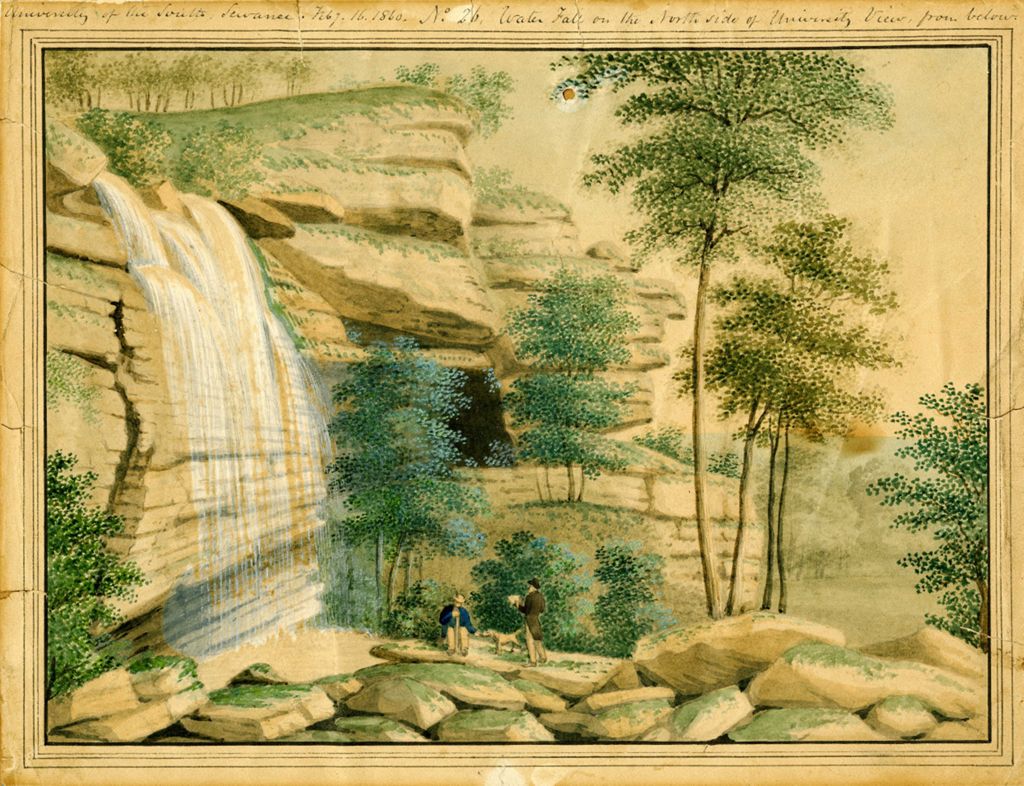 John Henry Hopkins Watercolors of the University of the South
  Joseph Vaughn Plaza: a space dedicated to Joseph Allen Vaughn
 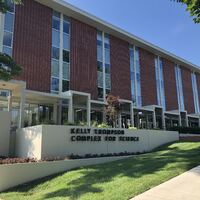 Kelly Thompson Hall; a classroom building dedicated to former President of Western Kentucky University Kelly Thompson
  Knox, Bethany “Beth” Teresa
  Knox, Gladys L.
 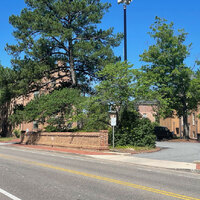 Legacy Circle; parking circle dedicated to the Legacy Three (Karen Ely, Janet Brown Strafer, and Lynn Briley)
 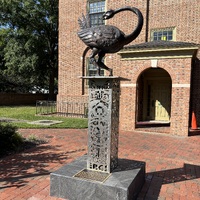 Legacy Tribute Garden; garden dedicated to Lynn Briley, Karen Ely, and Janet Brown Strafer
 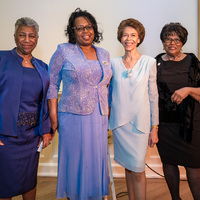 Legacy Weekend; one-time celebration commemorating 50th Years of African Americans in Residence at William & Mary
 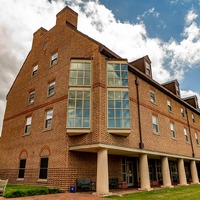 Lemon Hall; a residence hall building dedicated to Lemon
  Lemon Project Society; student volunteer society named to commemorate Lemon
  Let's Talk Poster series identifying subjects memorialized by buildings of the University of the South
  Lowery, Annie M.
  Lux Hall; formerly dedicated to James Yadkin Joyner
  Manly Hall; housing building dedicated to Charles Manly
 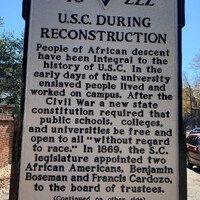 Marker memorializing Reconstruction at the University of South Carolina
 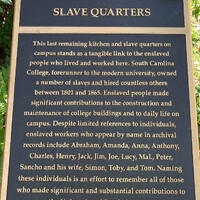 Marker memorializing slave quarters
  Marker memorializing slavery at South Carolina College
 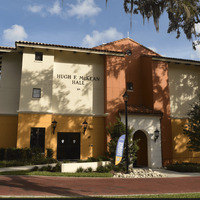 McKean Hall; A dormitory hall dedicated to Hugh F. McKean
  Memorial dedicated to John Tyler in the Tyler Family Garden
  Memorial dedicated to John Tyler, Sr. in the Tyler Family Garden
  Memorial dedicated to Lyon Gardiner Tyler in the Tyler Family Garden
  Memorial to Edmund Kirby-Smith
 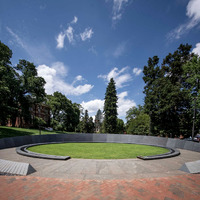 Memorial to Enslaved Laborers
  Miss Ida's Legacy
  Monument to the Back of the College Neighborhood