1976-2000: The Conservative Ascendancy and Retrenchment from Civil Rights Movement
Item
- Title
- Description
-
1976-2000: The Conservative Ascendancy and Retrenchment from Civil Rights Movement
-
This timeline designation enables the temporal indexing of persons and memorials, monuments, or other objects and places to persons who were active in education, politics, or other arenas of public action and who contributed through their actions to the celebration of Confederate “heritage” (including other euphemisms for the Lost Cause) in the period of the New Conservative ascendancy in American politics, society, and culture after 1976.
This period corresponds to the successful campaign, embraced by conservative Republicans and later by “New Democrats,” to eliminate or weaken instruments for redressing social inequity, such as busing to achieve racial desegregation and expanded social welfare supports to address urban and rural poverty. African Americans were disproportionately benefited by these policies. The early 1980s saw a resurgence of Klan organization and activity, and an invigoration of southern nationalist organizations, which deliberately distanced themselves and their rhetoric from racism but promoted the preservation of “southern culture” – the display of Confederate flags at public buildings, participation in Civil War battle reenactments, rallies at Confederate memorials – under the banner of “heritage not hate.” These developments were keyed to the “culture war” battles waged against supporters of the welfare state and “multiculturalism” in the 1980s and 1990s, which fed on fears of a declining birthrate of whites and the displacement of the white majority in the U.S. by Brown immigrants. They likewise drew energy from the “War on Drugs” launched by Reagan-era Republicans, which often unfairly targeted Black and Brown people, exploited the myths of “Black criminality,” and disproportionately channeled them into federal and state prisons. In the 1990s, white nationalist organizations grew in size, number, and public acceptance all across the U.S. Thanks to the successful lobbying of various state divisions of the Sons of Confederate Veterans – and indicative of the enhanced power of organizations celebrating the Confederacy and “Old South” in the 1990s – residents of states from Maryland south to Texas could purchase license plates featuring the Confederate flag in the seal of the SCV.
Position: 10101 (9 views)
Related Items
 Potter Hall; an administrative building named after Jerome Whitfield Potter
  Ratliff, Janice
 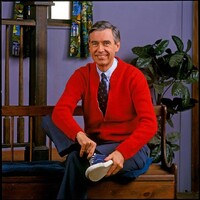 Rogers, Fred McFeeley
  Sada Elliott Place; a street dedicated to Sarah Barnwell "Sada" Elliott
 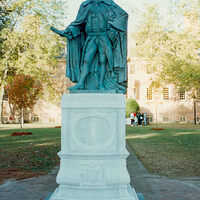 Sculpture dedicated to Norborne Berkeley, Lord Botetourt
 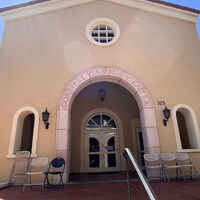 Skillman Building
  Spotswood Society: tour guide society named to commemorate Alexander Spotswood
 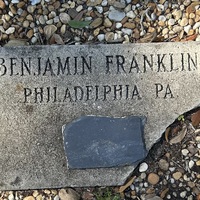 Stone memorializing Benjamin Franklin
 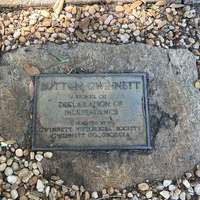 Stone memorializing Button Gwinnett
 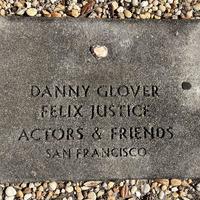 Stone memorializing Danny Glover and Felix Justice
 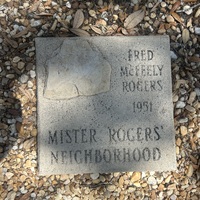 Stone memorializing Fred Rogers
 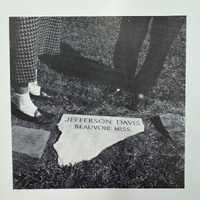 Stone memorializing Jefferson Davis
 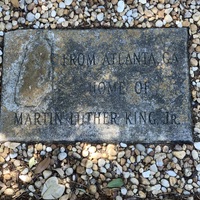 Stone memorializing Martin Luther King Jr.
 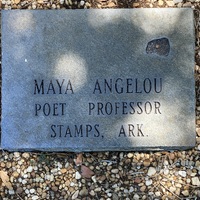 Stone memorializing Maya Angelou
 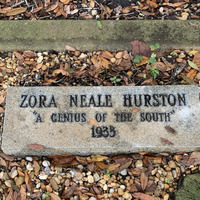 Stone memorializing Zora Neale Hurston
 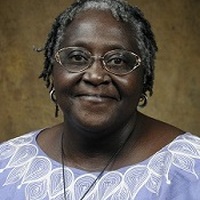 Tapia, Brenda L. Howard
 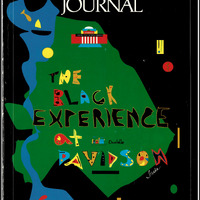 The Davidson Journal Profile of Brenda Tapia; a one-time event acknowledging the reparative work of a Davidson College employee
 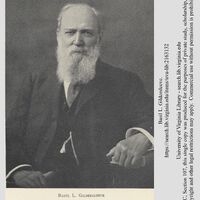 The Gildersleeve Endowed Professorship; A distinguished professorship for Classics professors commemorating Basil L. Gildersleeve
 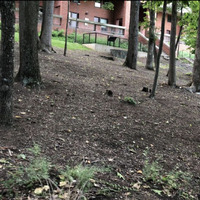 The Gooch-Dillard Enslaved Burial Ground
  The Mound (former site of Franklin Hall); a green knoll honoring the University's Confederate past
  Tree planted in memory of John N. Waddel
  Tree planted in memory of William A. Forbes
 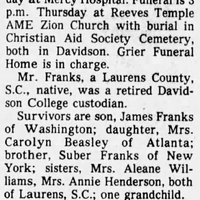 Unmarked memorial for James Daniel Franks
 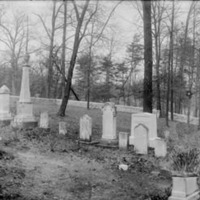 UVA Cemetery; a historically white cemetery
  Wightman Residence Hall; a residence hall named for William M. Wightman