1890-1945: Era of the Lost Cause, Jim Crow legal segregation and discrimination, and organized anti-Black racism
Item
- Title
- Description
-
1890-1945: Era of the Lost Cause, Jim Crow legal segregation and discrimination, and organized anti-Black racism
-
This timeline designation enables the temporal indexing of persons and memorials, monuments, or other objects, places, and events associated with persons in various arenas of public life who contributed to the imposition of formal or informal systems of race-based segregation, disfranchisement, and/or others forms of anti-Black discrimination. These persons may have been associated with such “Lost Cause” organizations as the United Confederate Veterans (1889; later, the Sons of Confederate Veterans) or the United Daughters of the Confederacy (1896). Such groups venerated the creators of the Southern nation for their defense of white racial supremacy by celebrating the military valor of its soldiers, asserting the constitutionality of secession, and spreading the fiction that slavery was not the cause of the Civil War. The period corresponds to white southerners’ adoption of new laws and policies associated with “Jim Crow” discrimination, which limited the political rights and civil and legal protections of Black people. This period also was one of extraordinary violence and terrorism led by white Americans against Black Americans, including raping of Black women, lynching, and wholesale destruction of African American communities in Wilmington, N.C., Tulsa, Okla., and other cities and towns in the southern United States. During these years, too, and especially during wartime periods of social disruption, large numbers of African Americans emigrated from the southern countryside to growing industrial centers in northern cities. The period ends with the close of World War II, which emboldened Black veterans to demand full citizenship and contributed to the erosion of support for discriminatory practices in the military and federal government and in American life in general.
Position: 7126 (13 views)
Related Items
 1848 Cadet Battery
  1920s student clubs named the K.K.K. and K.K.K.K.
  A stained-glass window dedicated to Confederate soldiers from the University of Alabama
 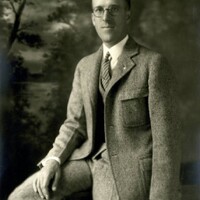 Alester Furman
  Archie, Mary Lewis
  Aycock, Charles Brantley
 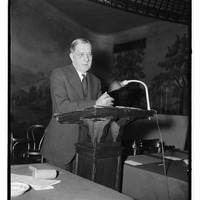 Bailey, Josiah W.
  Barnwell College; academic building dedicated to Robert Woodward Barnwell
 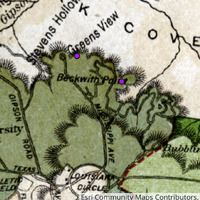 Beckwith Point; a scenic overlook dedicated to John Watrous Beckwith
 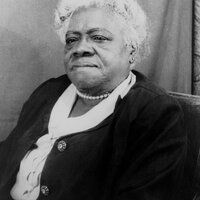 Bethune, Mary McLeod
  Boulder memorializing Confederate soldiers from The University of Alabama
 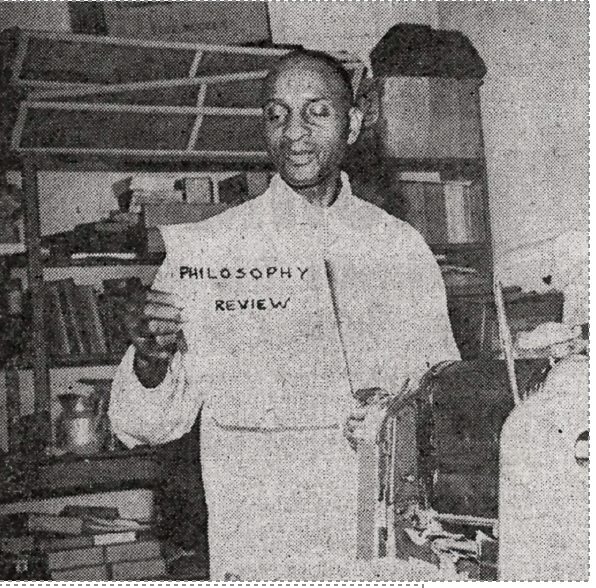 Brice, John Mack
 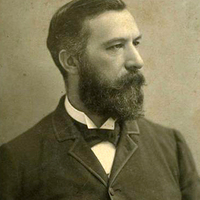 Broughton, Needham B.
 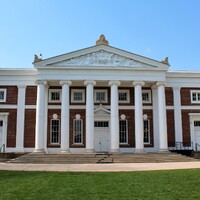 Cabell Hall
  Calhoun Literary Society, a literary society named to commemorate John C. Calhoun
  Capers, Ellison
  Carlisle, James Henry
 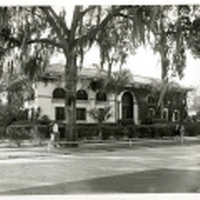 Carnegie Hall
  Ceremonial mace used at William & Mary convocations
  Clark Murphy Cobbs Lane; a street dedicated to Nicholas Hamner Cobbs
  Confederate Dead Memorial Service; A memorial service to honor the Confederate dead buried at the University Cemetery
  Conner, Cecelia V. Simolton Constitution Oak Plaque
  Coquina Garden Bench to Francis Philip Fatio