The Visitors' Center: An Incomplete History of the University
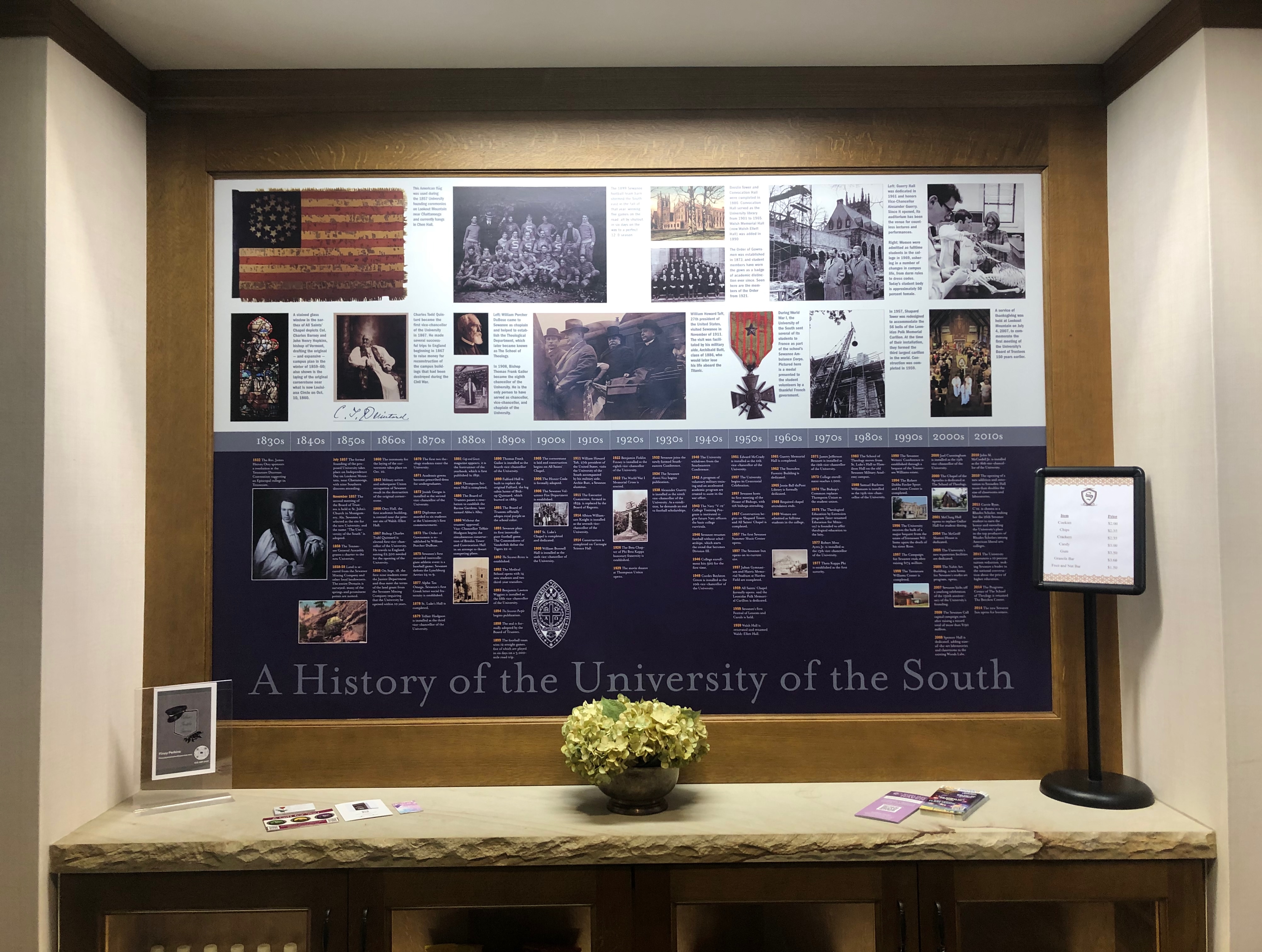
To the left of the Lobby, behind the reception desk, is The Visitors’ Center. Here, on the rear wall, we see an illustrated timeline of the University that lists the formative events in its history from the 1830s to the 2010s. Although the timeline notes the date when women were admitted to Sewanee (1969 in the College), it makes no mention of racial integration (1953 for the School of Theology; 1963 for the College of Arts and Sciences). Special attention is given to the admission of women in 1969, which “usher[ed] in a number of changes in campus life, from dorm rules to dress codes,” but there is no mention of the Black men and women who succeeded in challenging Sewanee's resistance to racial integration. The timeline includes the date when the first sorority came to Sewanee (1977); however, it omits mention of when African-American fraternities or sororities were started (1999 for Black men, Gamma Sigma Phi, and for Black women, Sigma Sigma Theta).
The timeline also prominently recognizes the early designers and administrators of the University, such as the Episcopal Bishops James Hervey Otey, John Henry Hopkins, Charles Todd Quintard, and Leonidas Polk. However, it does not reflect on the importance of slavery to careers of these men or to the early funding, identity, and educational design of the University of the South, the region the founding bishops called "the land of the sun and the slave."
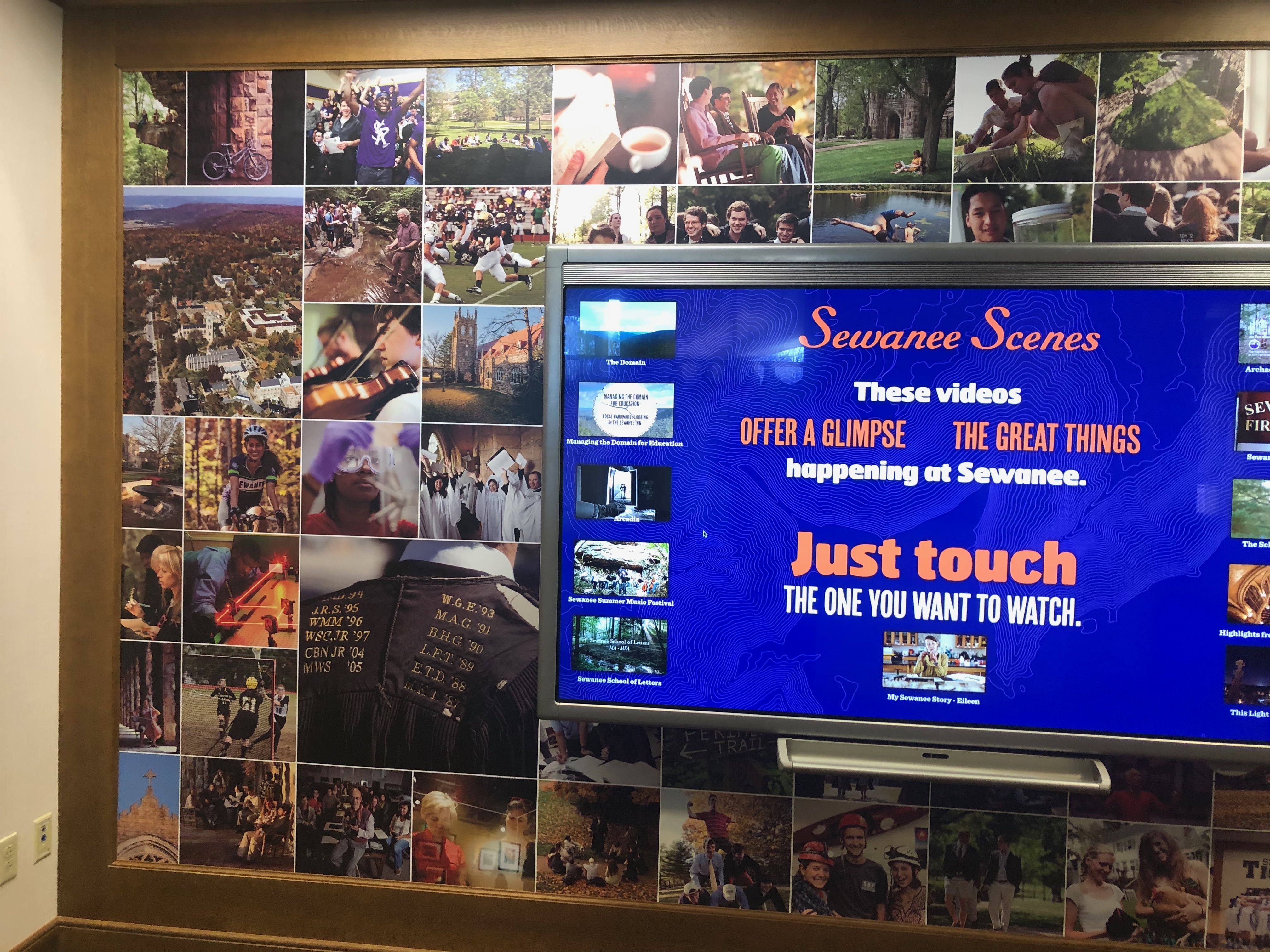
These omissions in this rendition of Sewanee's history are made even more evident in the mosaic of photos of contemporary Sewanee’s culturally diverse student population, which appears on the wall to the right of the timeline. The timeline is silent about the historical actors and changes in University policy and practices that forced the University’s eventual desegregation and made possible this community mosaic.
Use the following links to proceed to the Decorating with the Lost Cause introduction.