Memorial to Enslaved Laborers
Item
- Legacies Classification
- Memorial Type
- Memorial Context
- Memorialized Subject
- Title
- Background and Context
- Physical Description
- Memorial Inscription
- Creator/Participating Person(s)
- Date created, installed or dedicated
- Historical Period
- Funded by
- Location: Institution, City, State
- Learn More About this Subject
-
Memorial Structure
-
Memorial Artwork
-
Sculptural Memorial
-
The Memorial to Enslaved Laborers honors the lives, contributions, and resilience of those enslaved people who helped build and maintain life and learning at the University of Virginia from 1817 to 1865.
-
Memorial to Enslaved Laborers
-
For nearly five decades, the entire University was a site of enslavement. In 2013, President Teresa Sullivan formed the University of Virginia President's Commission on Slavery and the University (PCSU) to fully research the history of slavery at UVA, to educate the world, and to appropriately memorialize that history. In fall 2016, the design team of Howeler + Yoon was selected and hired as the University of Virginia slavery memorial design consultant. They worked with the PCSU to get community feedback about the proposed memorial (what might it look like? Where might it sit on Grounds? and so on…) from the wider community–students, faculty, staff, alumni, and neighbors in Charlottesville, Albemarle county, and Central Virginia.
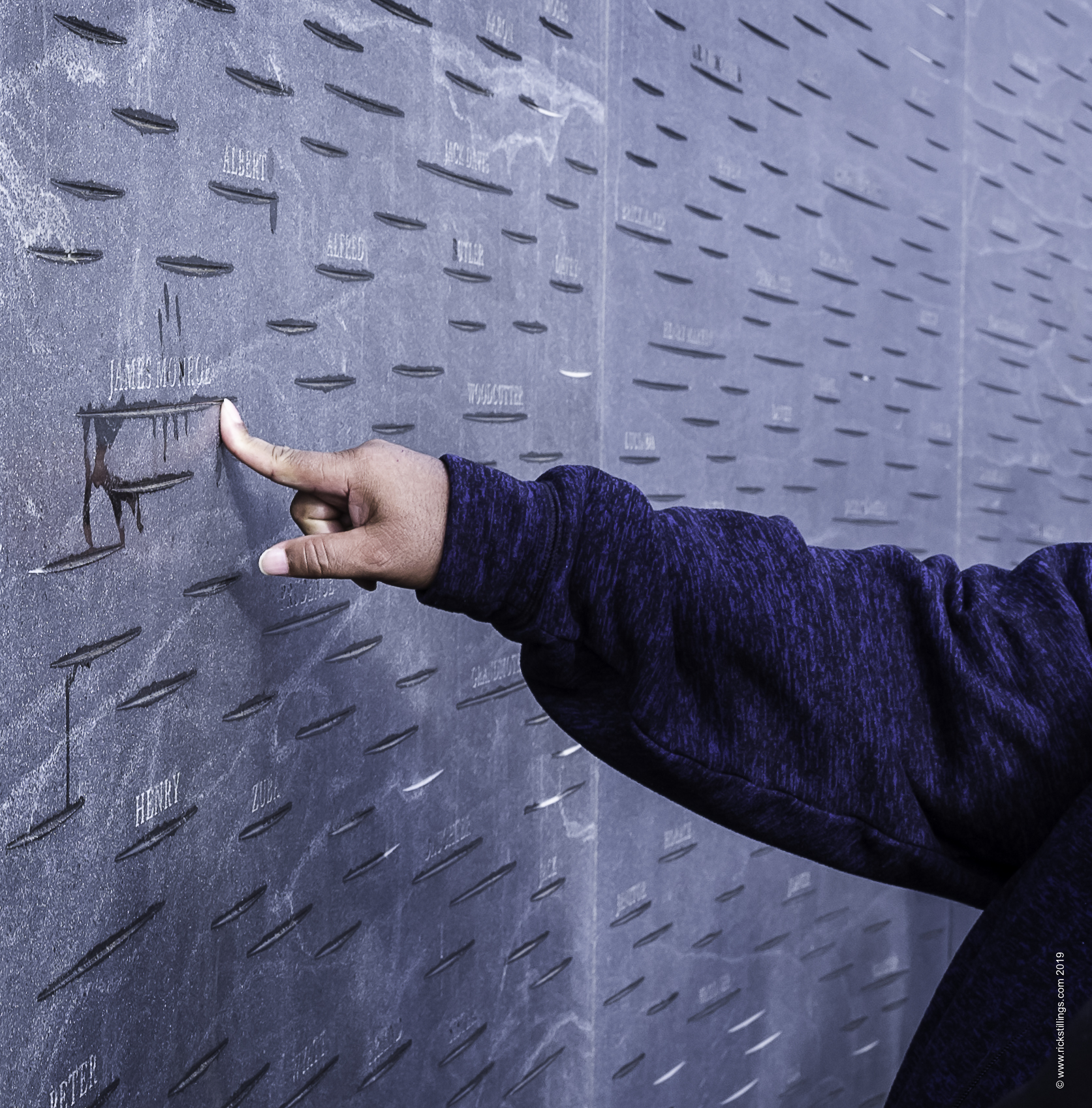
The resulting design beautifully captures the tenor of those community conversations, honors the lives, labor, and resistance of the 4-5,000 enslaved people who lived and worked at UVA at some point between 1817 and 1865. The memorial includes 4,000 memory marks in their honor. As J. Meejin Yoon of the design team says, “The memorial invites exploration. You can reach out and touch every mark.”
The memorial was completed in spring 2020 and a public dedication was planned for April 2021, but the pandemic meant postponing the dedication for a year and moving it to a largely virtual ceremony in April 2021.
Since the University of Virginia’s founding, the belief that inquiry and knowledge are essential to a thriving democracy has stood at its core. This focus has continually led UVA to seek new challenges, break through barriers, and pursue uncharted paths. Today, UVA leads the nation in deepening our understanding of the role of enslaved laborers in building our country and its institutions—including this University.
The Memorial to Enslaved Laborers at the University of Virginia began with a student-led effort in 2010 and is a shining example of student self-governance. The memorial acknowledges and honors the 4,000 or more individuals who built and maintained the University. In addition to clearing land, digging foundations, fetching water, chopping and stacking wood, cleaning, and completing daily chores for students and professors, they engaged in highly skilled labor—including cooking, molding and firing brick, complex carpentry work, roofing, transporting and carving quarried stone, blacksmithing, working as scientific laboratory assistants, and making clothing, All these men, women, and children lived with dignity, resisted oppression, and aspired for freedom.
-
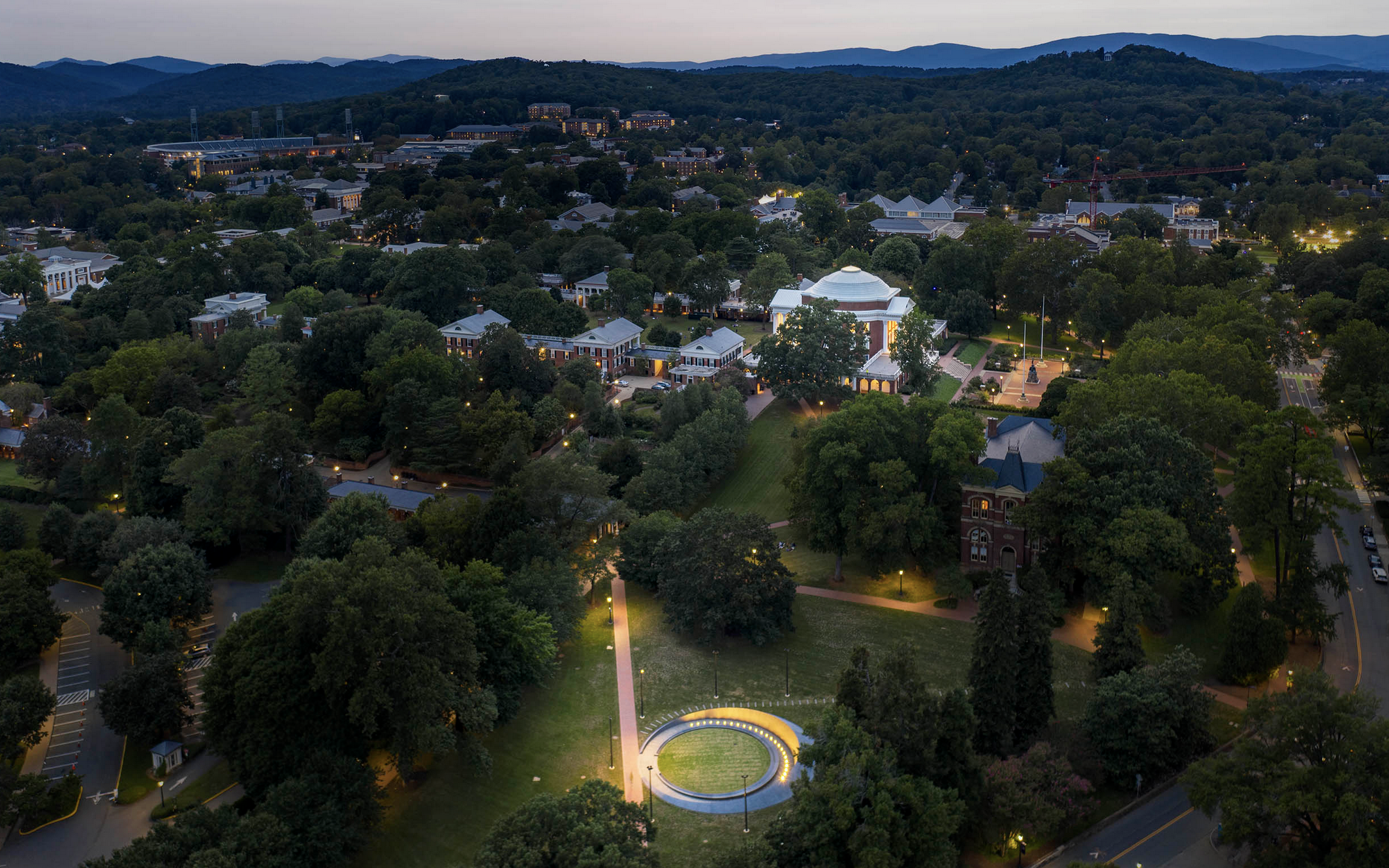
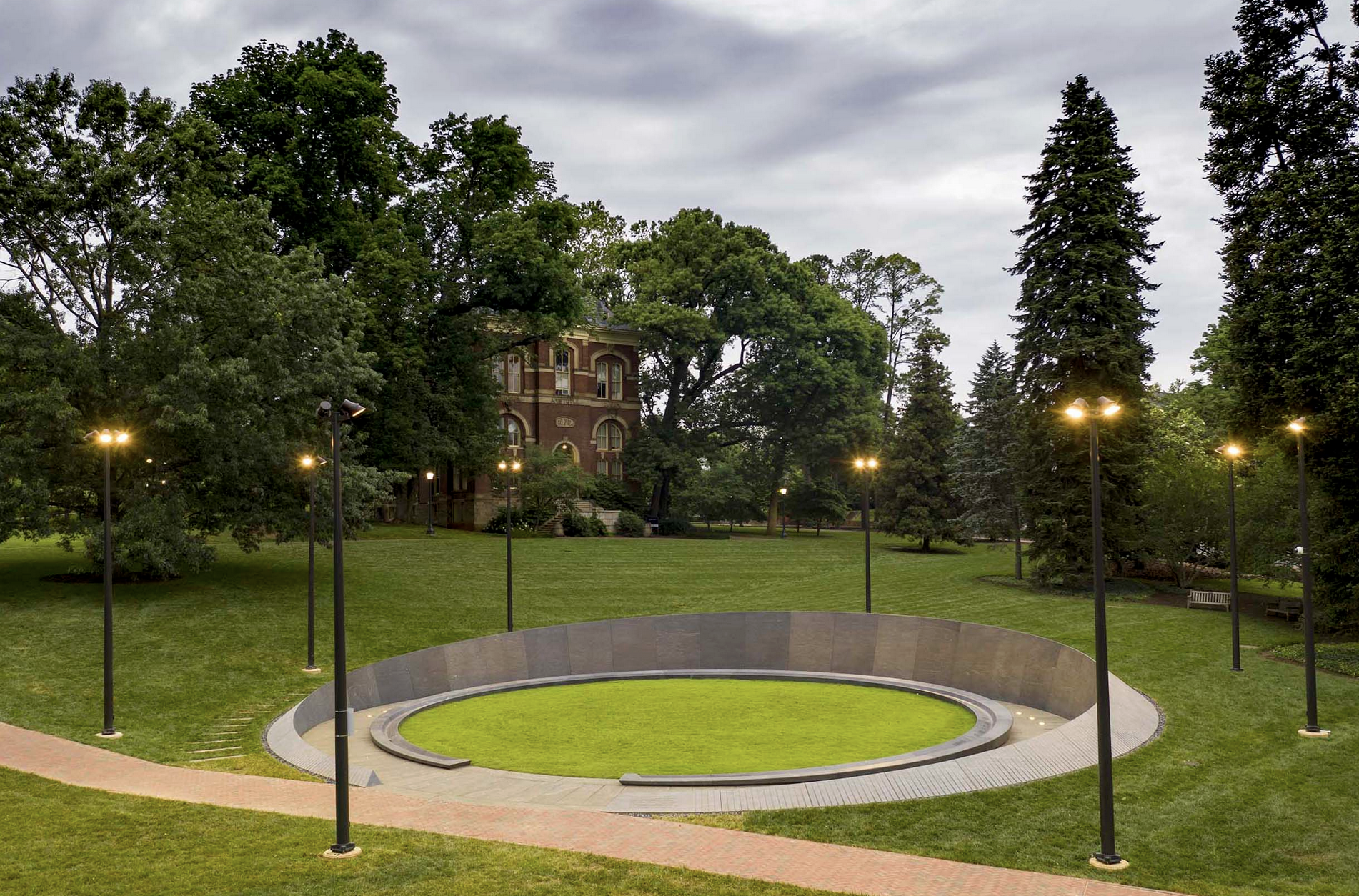
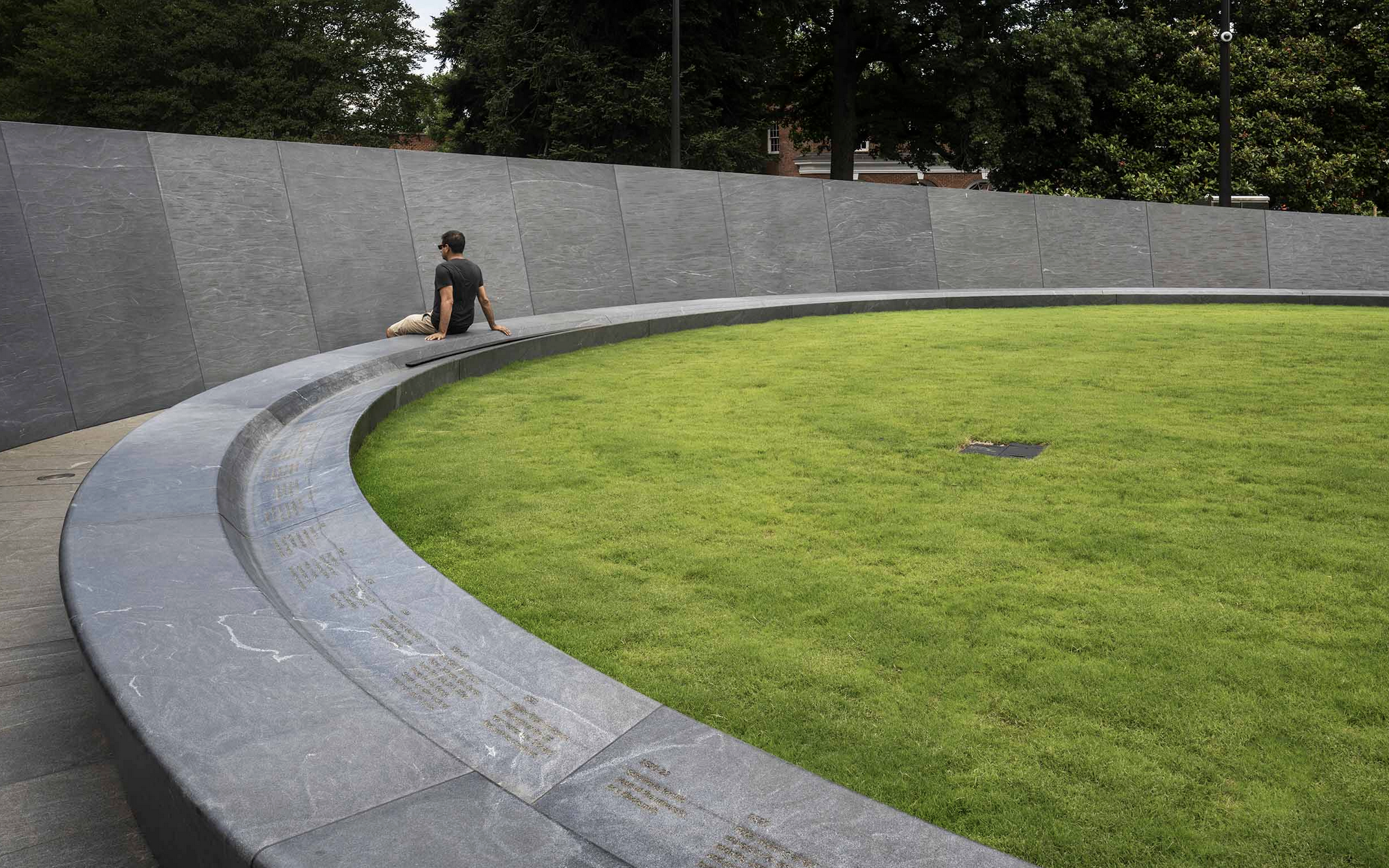
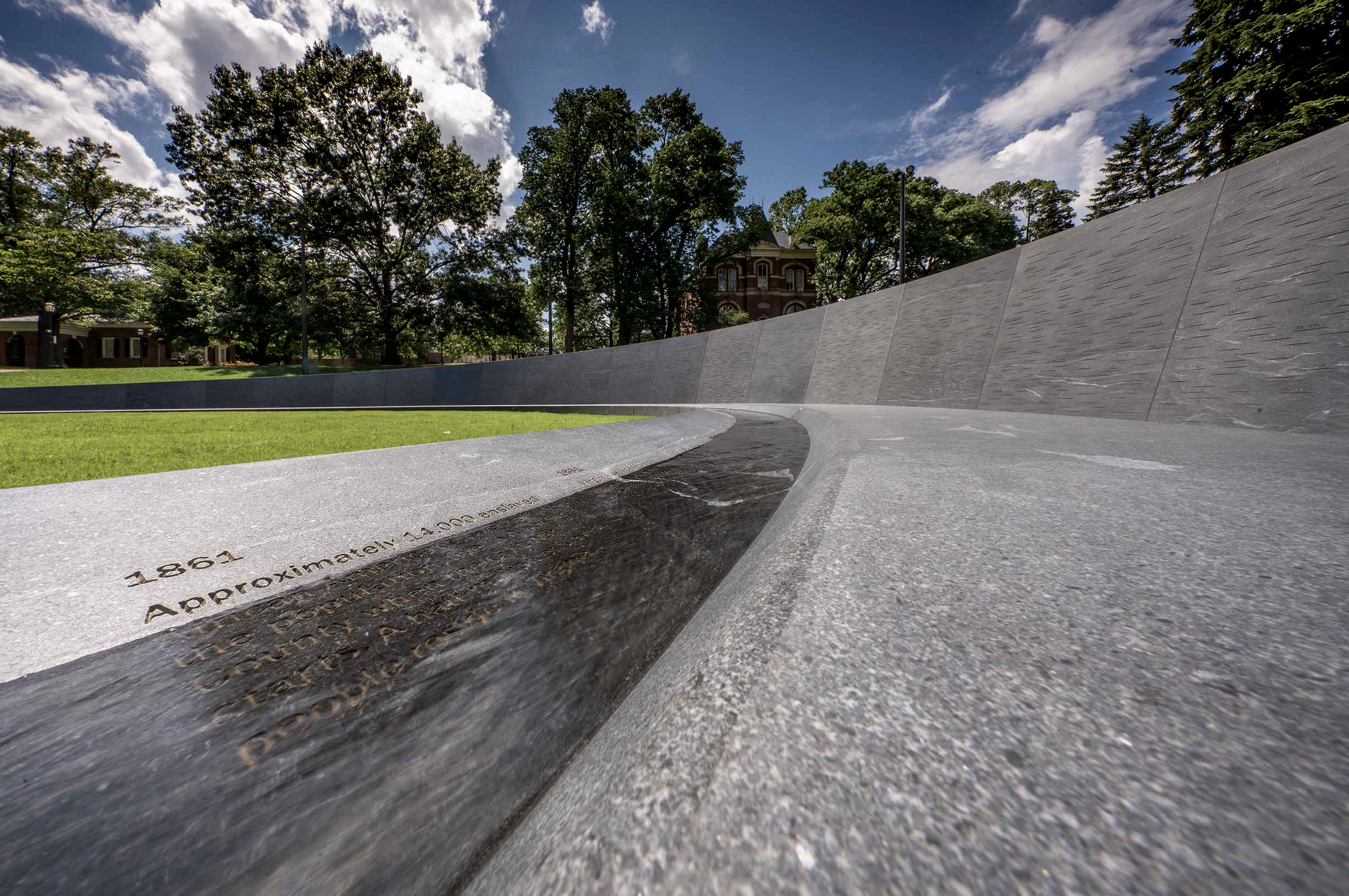
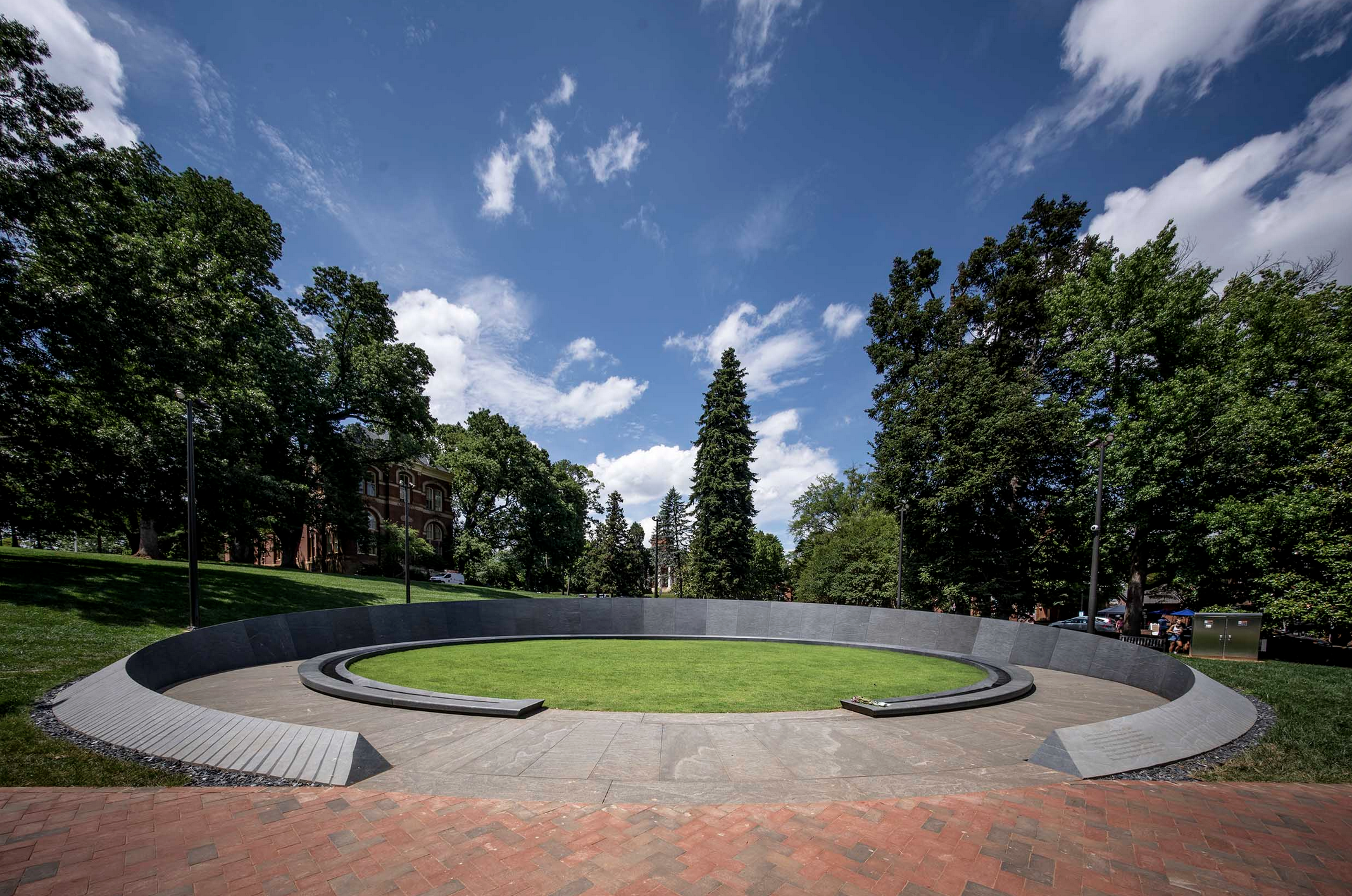
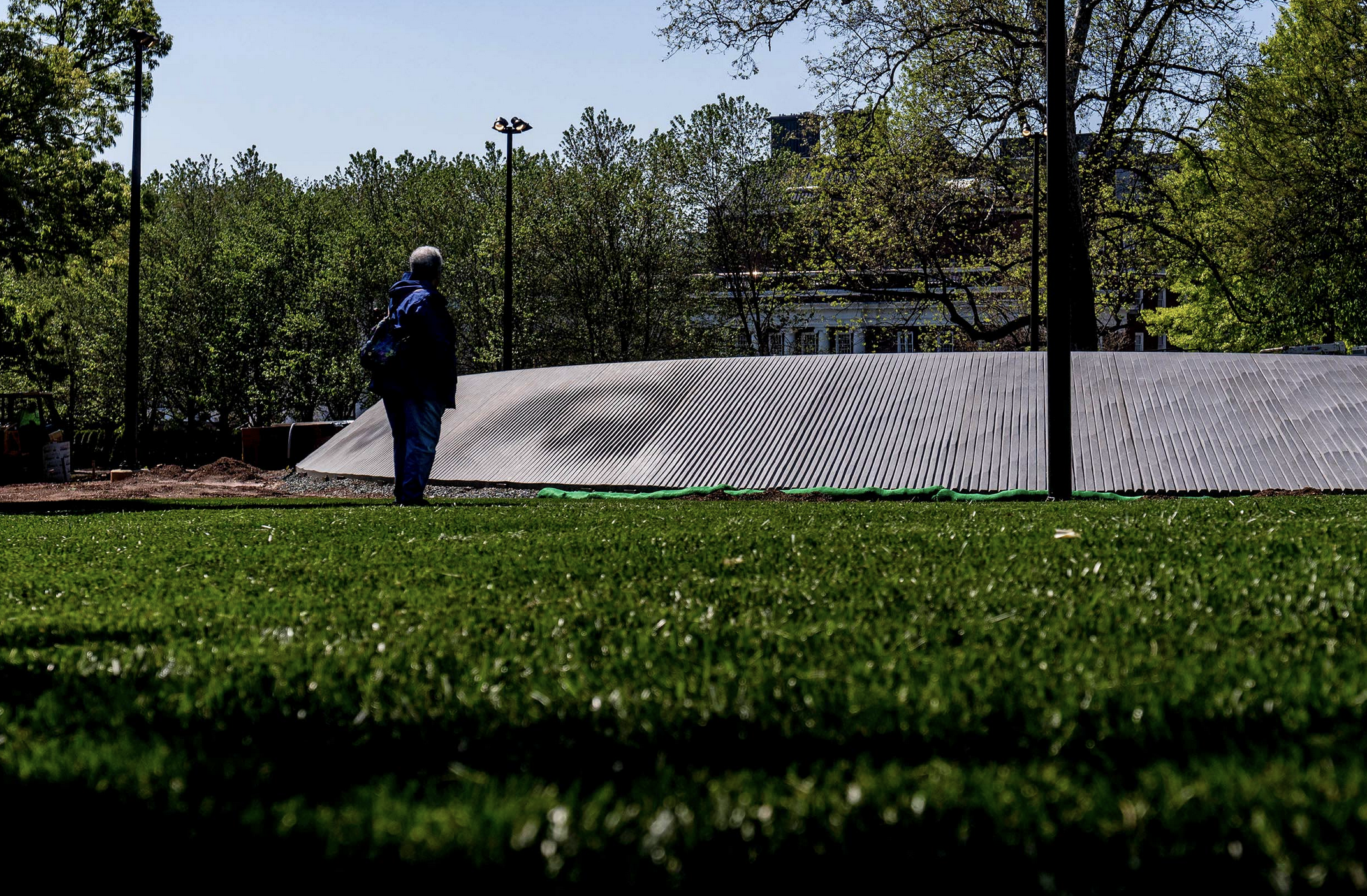
UVA's Memorial to Enslaved Laborers (MEL) is located on the University's main campus, near the University of Virginia Corner, east of Brooks Hall and the Rotunda. It consists of a wall of local "Virginia Mist" granite, in the shape of a broken ring, tsymbolizing both the shackles of bondage and their breaking in emancipation. The granite ring is eighty feet in diameter, echoing the dimensions of Jefferson’s Rotunda just to the west. Inside the outer ring is a second concentric ring inscribed with a timeline documenting the history of slavery at the University.
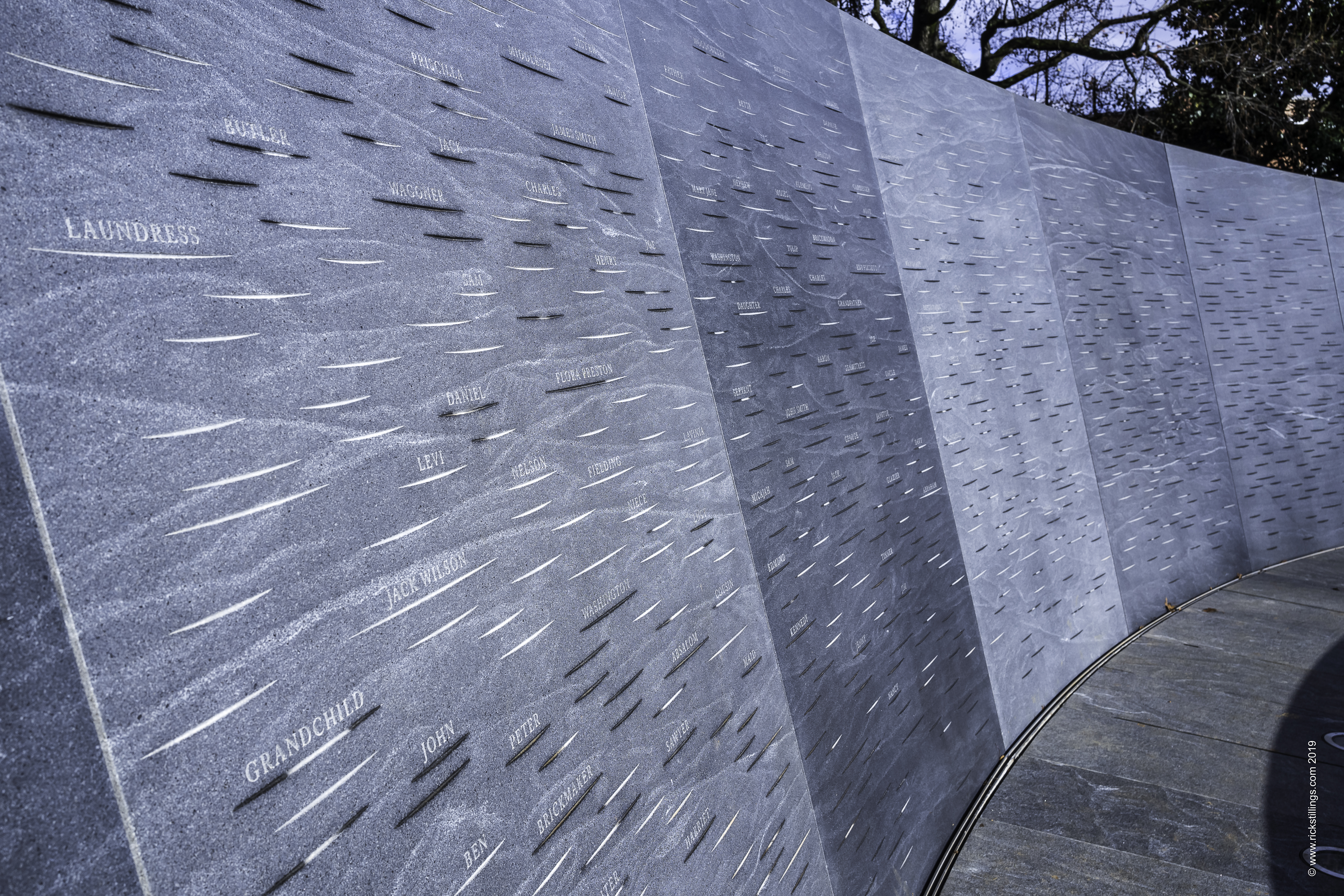
The inner wall of outer ring, a memory wall, is inscribed with "memory marks" evoking the image of the lash. There is one such mark for each of the estimated 4,000 enslaved people that labored at UVA. To date approximately 600 memory marks are also inscribed with the name of an enslaved person. An ongoing project at UVA continues to identify those enslaved at the school. Over two hundred new names have been identified as of 2025. Their names are slowly being added to the memorial.
The exterior of the outer ring also includes an engraved set of the eyes of Isabella Gibbons, a woman enslaved by a professor who after emancipation went on to become a teacher in the local freedmen's school.
MEL is oriented tangent to two paths. The first path leads from the Memorial in the direction of the North Star, which for the enslaved led to freedom. It has 48 slabs, one for each year of bondage at UVA The second path aligns with the sun's path through the sky on March 3. March 3, 1865, was the day that United States troops briefly occupied Charlottesville after the university and city surrendered. This was only a month before Lee's Confederate Army surrendered at Appomattox. March 3 was long commemorated by freedpeople locally as the beginning of emancipation. The communities of Charlottesville and the University today observe this important event through the newly instituted Liberation and Freedom Days annual celebrations.
-
The inner ring's timeline ends with an inscription from Isabella Gibbons in 1867: "Can we forget the crack of the whip, the cowhide, whipping-post, the hand-cuffs, auction-block, the spaniels, the iron collar, the negro-trader tearing the young child from its mother’s breast as a whelp from the lioness? Have we forgotten that by those horrible cruelties, hundreds of our race have been killed? No, we have not, nor ever will."
-
• UVA President's Commission on Slavery and the University (PCSU)
• Howeler + Yoon
-
April 10, 2021
-
University of Virginia
-
• UVA President's Commission on Slavery and the University (PCSU) Website
• 2018 UVA PCSU Report
• MEL Website
Position: 1380 (64 views)