1945-1976: Era of Civil Rights Movement and resistance to Civil Rights Movement
Item
- Title
- Description
-
1945-1976: Era of Civil Rights Movement and resistance to Civil Rights Movement
-
This timeline designation enables the temporal indexing of persons and memorials, monuments, or other objects and places to persons who were active in education, politics, or other arenas of public action and who contributed through their actions to the imposition of formal or informal systems of race-based segregation, disfranchisement, and/or others forms of anti-Black discrimination.
This period corresponds to exceptional and successful challenges to laws that enforced racial discrimination, and imposition of new federal, state, and local laws seeking to redress generations of formal and informal practices that discriminated against Black and Brown people. The period also corresponds to new movements to resist Civil Rights legislation and policies, portended by the political campaigns of Alabama Gov. George Wallace and invigorated in the anti-busing and anti-affirmative action campaigns of Republican Richard Nixon and new conservative leaders. By the end of this period, a new and younger generation of Black leaders identified with “Black Power '' ideology which and focused on the violence inflicted against people of color and the social conditions of American cities. These leaders gained notoriety and power by rejecting earlier generations’ reliance on non-violent protest and court decisions to end racial discrimination and calling for more militant action to end white supremacy in the U.S. At the same time Black leaders gained new and visible formal sources of political power, signaled especially by election to mayoralties in major cities from Atlanta to Los Angeles. Indicative of the persistence of memorialization in this era of Civil Rights gains was the completion of the nation’s largest “Lost Cause” monument, at Stone Mountain, near Atlanta, the construction of which began in the 1920s and officially finished in 1972.
Position: 6446 (14 views)
Related Items
 Grover, Edwin Osgood
  Harriet Cheney Cowles Memorial Library Harry Flood Byrd, Jr., Professor of Government and Foreign Affairs
  Headstone for John Mack Brice
  Headstone of Enoch Donaldson
  Headstone of John Heath
  Heath, John
  Hightower, Glenda Phillips
  Historic sundial commemorating the former location of the Toombs Oak and its association with Robert Toombs
 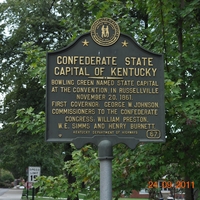 Historical marker memorializing Confederate State Capital of Kentucky
 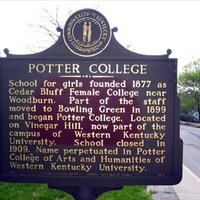 Historical marker memorializing Pleasant J. Potter and Potter College for Young Ladies
  Historical marker memorializing Robert W. Ogden and Ogden College
  History of Meredith College by Mary Lynch Johnson
 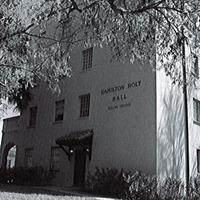 Holt Hall; A dormitory hall dedicated to Hamilton Holt
 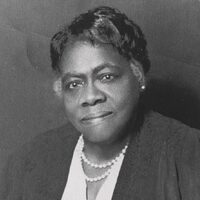 Honorary Doctor of Humanities
 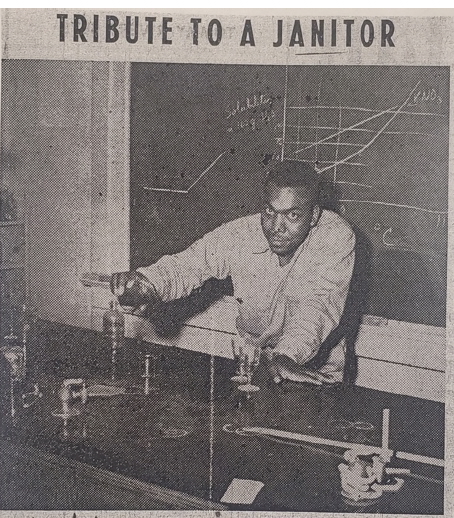 Howard, James W.
 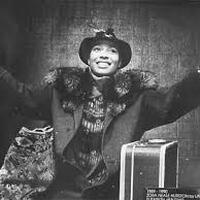 Hurston, Zora Neale
 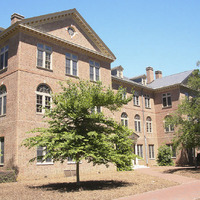 James Blair Hall; academic building dedicated to James Blair
  Jessie Ball duPont Library; library dedicated to Jessie Ball DuPont
  Johnston, Eric A.
  Jones Hall; Building for special events featuring an auditorium and performance spaces dedicated to Wesley Norwood and Sallie Bailey Jones
  Joyner, James Yadkin
 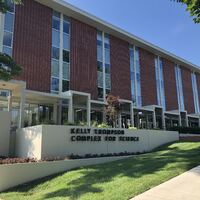 Kelly Thompson Hall; a classroom building dedicated to former President of Western Kentucky University Kelly Thompson
  Lindaman, Edward B.
  Lowery, Annie M.