Faircloth, William Turner
Item
- Connection to Legacies of American Slavery Database
- Name
- One-line bio
- Biography
- Date of Birth
- Date of Death
- Historical Period
- Related Organization(s)
- Related Person(s)
- Employed By
- Wikidata Link
- Learn More About this Subject
-
Faircloth, William Turner
-
North Carolina slave owner, Confederate officer, lawyer, legislator, and judge who played a role in shaping the state’s legislature after the end of the Civil War, served on the state's Supreme Court and supported various Baptist institutions during his lifetime.
-
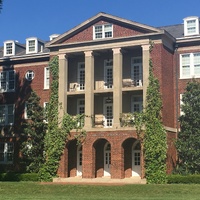
William Turner Faircloth (1829-1900) was born in Edgecombe County, North Carolina. Slave rolls from 1860 reveal that Faircloth owned at least twenty-seven enslaved persons. At 21, he enrolled in Wake Forest College and graduated as head of his class, attending law school at Richmond Hill. He practiced law in Goldsboro until 1861 when he voluntarily served as first lieutenant and later captain and assistant quartermaster in the Confederate army during the Civil War. After being pardoned by the Union, Faircloth was elected as a representative of Wayne County to the state constitutional convention (1865-1866). Faircloth voted with the rest of the representatives to ban slavery from the state forever, as well as renouncing secession. He voted to support the education of black teachers and ministers. The final version of the constitution consisted of discriminatory Black Codes that would consistently impact the freed black population in the years to come, which passed regardless of Faircloth’s vote of disapproval. In 1875, after his alignment with the Republican party, he was elected as a delegate to the state constitutional convention. In November of the same year, he was appointed NC Supreme Court Associate Justice and held the position until his term expired in 1878. Between 1891 and 1900, Faircloth served on the board of trustees of Wake Forest College, The University of North Carolina, the Baptist Orphanage at Thomasville, and Meredith College. Buildings constructed at the Baptist Orphanage at Thomasville and Meredith College were named after him. In 1894, Faircloth was elected Chief Justice of the North Carolina Supreme Court, where he served until his health deteriorated five years into the position, and he died of a stroke.
-
January 8, 1829
-
December 29, 1900
-
Wake Forest College, Whig Party, Republican party, First Missionary Baptist Church, Baptist Orphanage at Thomasville, The University of North Carolina, State Psychiatric Hospital
-
State of North Carolina

Position: 31 (538 views)