Marker memorializing slave quarters
Item
- Legacies Classification
- Memorial Type
- Memorial Context
- Memorialized Subject
- Title
- Background and Context
- Physical Description
- Memorial Inscription
- Creator/Participating Person(s)
- Date created, installed or dedicated
- Historical Period
- Location: Institution, City, State
- Learn More About this Subject
-
Memorial Object
-
Plaque/Marker
-
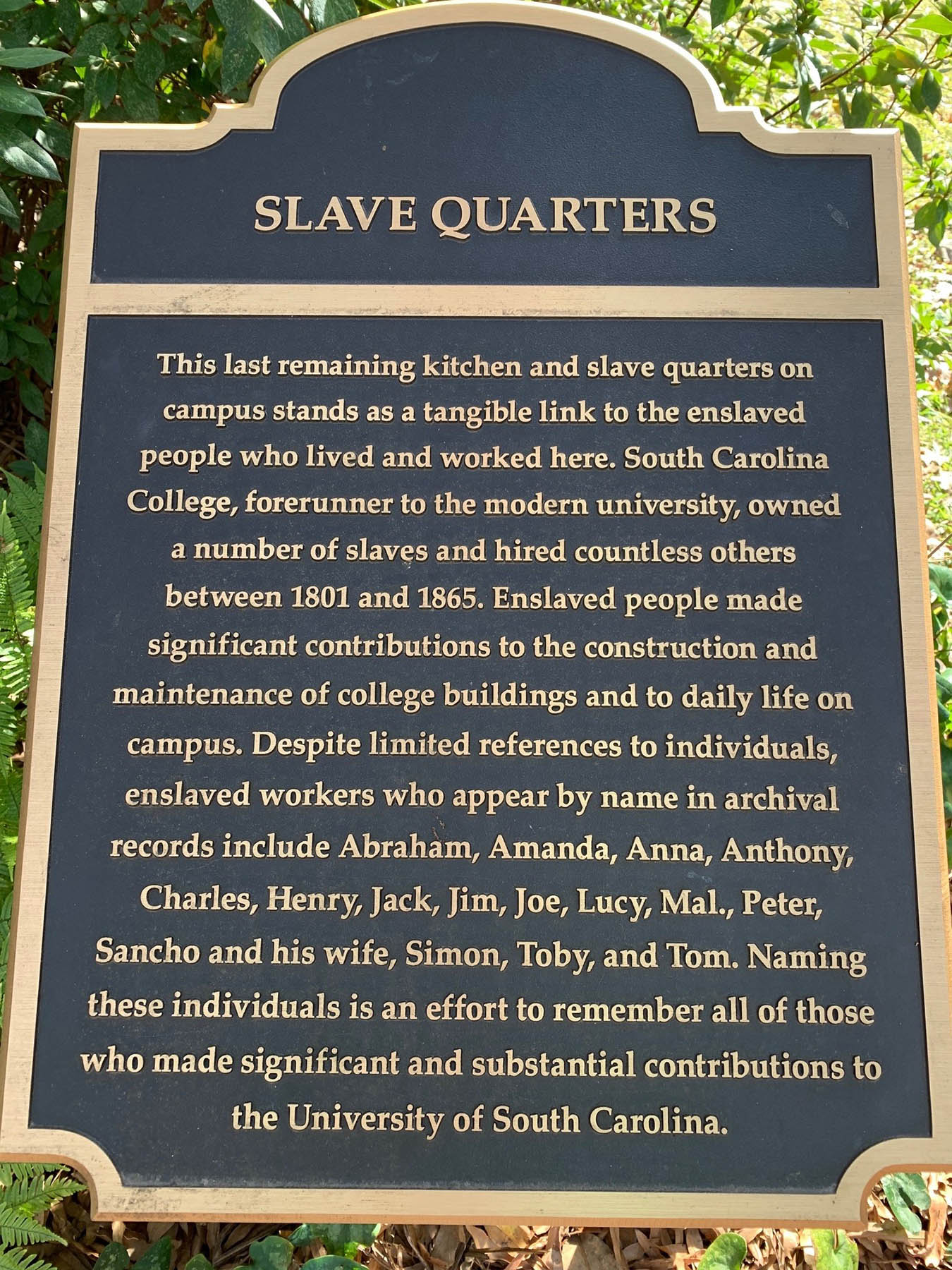
Acknowledgment of the contributions of enslaved workers at South Carolina College and identification of the last remaining slave quarters on campus.
-
Marker memorializing slave quarters
-
The marker is one of two that are the result of student research and activism. The USC Vision 2020 group formed to demand systematic changes to create a more representative, inclusive, and diverse campus climate. The protesters, dressed in black, marched peacefully from Longstreet Theatre, across the Historic Horseshoe, to the Osborne administration building where they presented a list of 12 demands to Provost Joan Gabel. Among the demands was that the university acknowledge the institution was built by enslaved labor, and include that information on markers and in campus tours. Student research on slavery at South Carolina College had been conducted in previous years, and presented on a student-created website hosted by the university libraries, but the university had not issued formal acknowledgment of the issue. An ad hoc committee of the board of trustee was established in 2016 to develop two markers acknowledging the contributions of enslaved workers and the last remaining slave quarters on campus. The markers were dedicated on Dec. 5, 2017, with a ceremony at Rutledge Chapel.
-
Bronze marker placed near the slave quarters which is located behind the president's house, on the Historic Horseshoe.
-
Slave Quarters. This last remaining kitchen and slave quarters on campus stands as a tangible link to the enslaved people who lived and worked here. South Carolina College, forerunner to the modern university, owned a number of slaves and hired countless others between 1801 and 1865. Enslaved people made significant contributions to the construction and maintenance of college buildings and to daily life on campus. Despite limited references to individuals, enslaved workers who appear by name in archival records include Abraham, Amanda, Anna, Anthony, Charles, Henry, Jack, Jim, Joe, Lucy, Mal., Peter, Sancho and his wife, Simon, Toby, and Tom. Naming these individuals is an effort to remember all of those who made significant and substantial contributions to the University of South Carolina.
-
Ad hoc committee on slavery markers
USC Vision 2020
-
December 5, 2017
Position: 3842 (24 views)