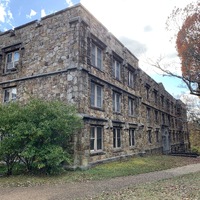
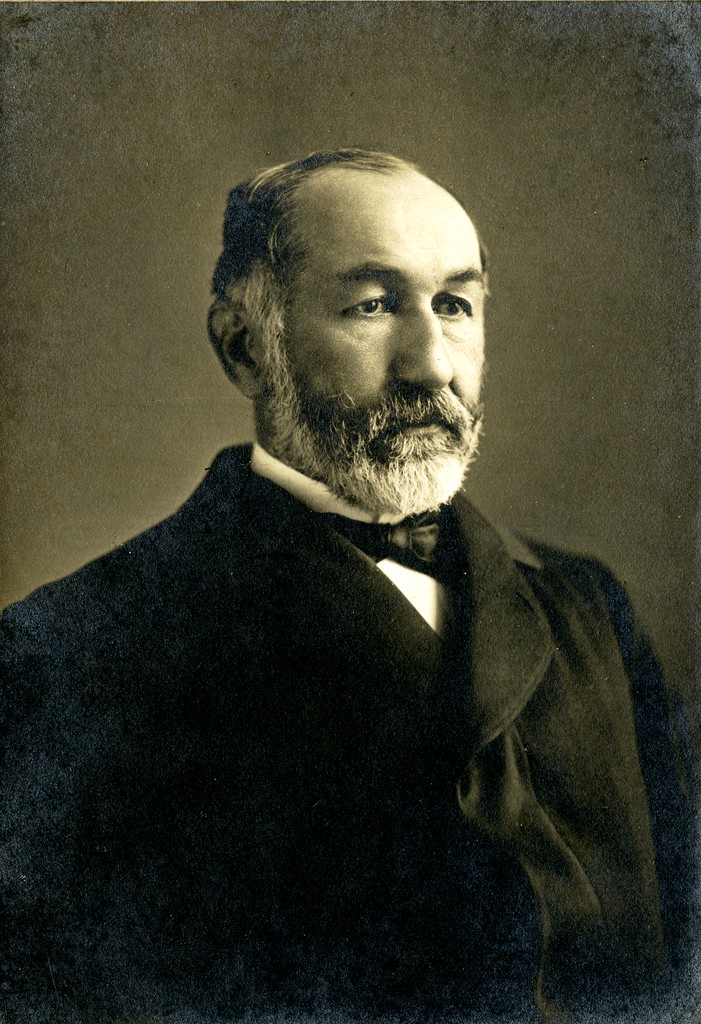
Gorgas, Josiah
Item
- Connection to Legacies of American Slavery Database
- Name
- One-line bio
- Biography
- Date of Birth
- Date of Death
- Historical Period
- Related Organization(s)
- Related Person(s)
-
Gorgas, Josiah
-
Josiah Gorgas, served in the Confederate Army, was the second vice-chancellor of the University of the South and president of the University of Alabama
-
Josiah Gorgas was born in Lancaster County, Pennsylvania, in 1818 and graduated from West Point in 1841. During his military service, especially in the war with Mexico, he developed expertise in the Ordnance Department (managing supply and storage of weapons, ammunition, and other military equipment). In 1853, while stationed at the federal Mount Vernon Arsenal near Mobile, Alabama, Gorgas met and married Amelia (Minnie) Gayle, daughter of a federal judge, former governor, and congressman. According to the 1850 census, Judge Gayle held seven people in bondage at his Mobile home. Six years later, the Pennsylvanian Gorgas declared himself a Southerner in Russell’s Magazine: “The South has, indeed, … wooed and won me. Its blandishments have stolen into my senses, and I am its willing victim.” The Gorgases fantasized about “buying a plantation & 40 or 50 slaves, to settle down upon when we get old. Minnie’s heart yearns for the darkies & she is prepared to spoil any number of them by indulgence.” The 1860 census found the Gorgas family in Charleston, S.C., enslaving a young family of four and reporting extraordinary personal wealth ($150,000 in real estate, $100,000 in personal—including enslaved—property).
When the southern states seceded and joined in forming the Confederacy, Gorgas immediately resigned his U.S. Army commission and joined the Confederate military as Chief of Ordnance at the rank of major. Historians such as James McPherson have described him as “a genius at organization and improvisation” who kept the Confederate troops well supplied with munitions and supplies through much of the war. But Gorgas also oversaw an extensive network of manufacturing operations and supply chains that employed thousands of enslaved women, children, and men to mine saltpeter for gunpowder and operate ironworks, often under horrendous conditions. The journalist Douglas Blackmon, in Slavery By Another Name, calls Gorgas “the architect of the slave-driven Alabama wartime industrial complex.” In all, Gorgas was a critical figure in massing slave labor to equip and arm the Confederate military and to advance the campaign to preserve and protect slavery. By late 1864, however, he advocated saving the southern nation by offering freedom to slaves who took up arms for the Confederacy. “We must meet the use the north makes of our negros by using them ourselves, & giving them the Same reward.” This proposal never went into effect. By the time of the surrender, Gorgas had achieved the rank of brigadier general.
After the Civil War, Gorgas tried to start up an ironworks in Alabama, but after its failure he found his way to Sewanee to serve as headmaster of the Junior Department (the University’s preparatory division) before being named its second vice-chancellor in 1872. He was a committed opponent of Reconstruction, especially the enfranchising of Black men — “the northern fanatics endeavoring to convert the Southern States into a Jamaica.” He predicted the eventual extinction of African Americans as they yielded “before the moral & intellectual superiority of the white.” In 1878 and after a rocky tenure marked by conflict with the University’s trustees, Gorgas left Sewanee to assume the presidency of the University of Alabama.
-
1818
-
1883
-
Gorgas, William Crawford
Gorgas, Amelia Gayle
Position: 8908 (14 views)