Hardman Cemetery/Hardman Family Cemetery
Item
- Legacies Classification
- Memorial Type
- Memorial Context
- Memorialized Subject
- Title
- Background and Context
- Physical Description
- Memorial Inscription
- Creator/Participating Person(s)
- Date created, installed or dedicated
- Historical Period
- Funded by
- Location: Institution, City, State
-
Memorial Place
-
Space on Campus
-
The cemetery is named after the Hardman family, early settlers, and landowners in DeKalb County. It memorializes not just the Hardman family but also other early settlers of the area, including white settlers and enslaved African Americans.
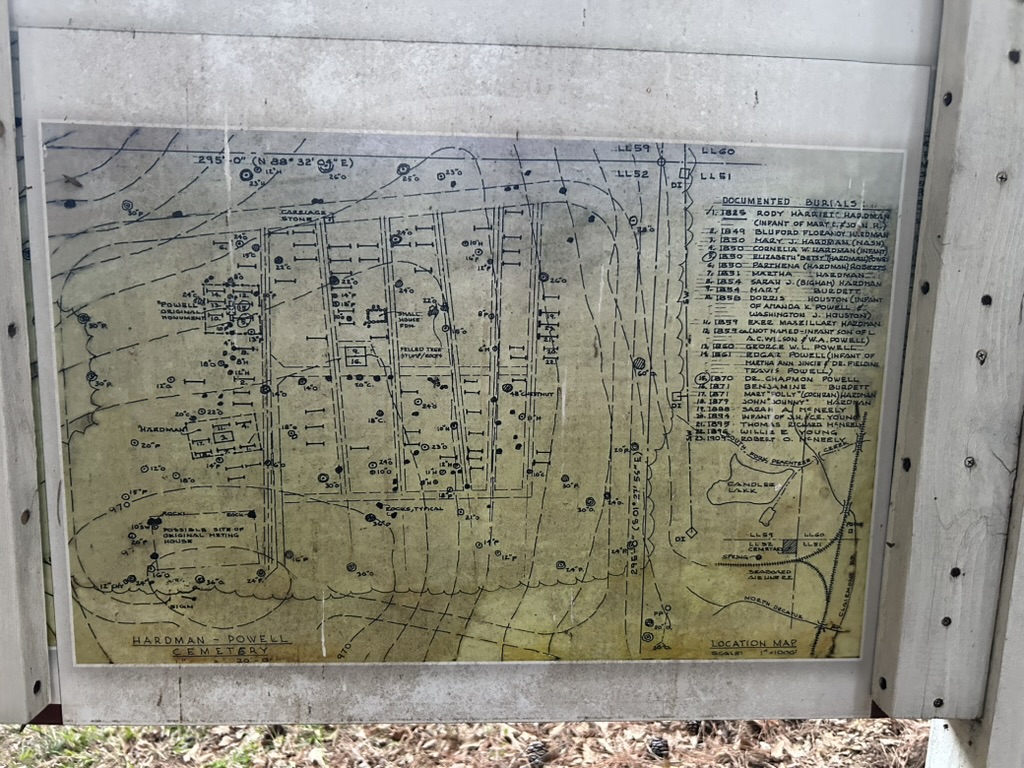
The Hardman Cemetery contains grave sites for the following people:
1825 – Rody Harriet Hardman (Infant of Mary J. & Jon H.)
1849 – Bluford Floranoy Hardman
1850 – Mary J Hardman (Nash)
1850 – Cornelia W. Hardman (Infant)
1850 – Elizabeth “Betsy” Hardman Power
1850 – Parthena (Hardman) Roberts
1851 – Martha Hardman
1854 – Sarah J. (Bigham) Hardman
1854 – Mary Burdett
1858 – Dorris Houston (Infant of Amanda K. Powell & Washington J. Houston)
1859 – Exer Maxzillary Hardman
1859 – (Not Named-Infant Son of L.A.C. Wilson & W.A. Powell)
1860 – George W.L. Powell
1861 – Edgar Powell (Infant of Martha Ann Jincie & Dr. Fielding Tavis Powell)
1870 – Dr. Chapmon Powell
1871 – Benjamine Burdett
1871 – Mary “Folly” (Cochran) Hardman
1879 – John “Johnny” Hardman
1888 – Sarah A. McNeely
1894 – Infant of JHUCE Young
1895 – Thomas Richard McNeely
1896 – Willie E. Young
1909 – Robert O. McNeely
-
Hardman Cemetery/Hardman Family Cemetery
-
The Hardman Family Cemetery, established in 1825, is one of the oldest landmarks in DeKalb County, Georgia. Naman Hardman donated the land for both the cemetery and the adjacent Primitive Baptist Church of Christ, which was chartered in the same year. The cemetery's location was near the Shallowford Indian Trail, an important trade route that connected the Cherokee Nation to Decatur and Stone Mountain. This trail was later widened into a stagecoach route called Shallowford Road, now known as Clairmont Road.
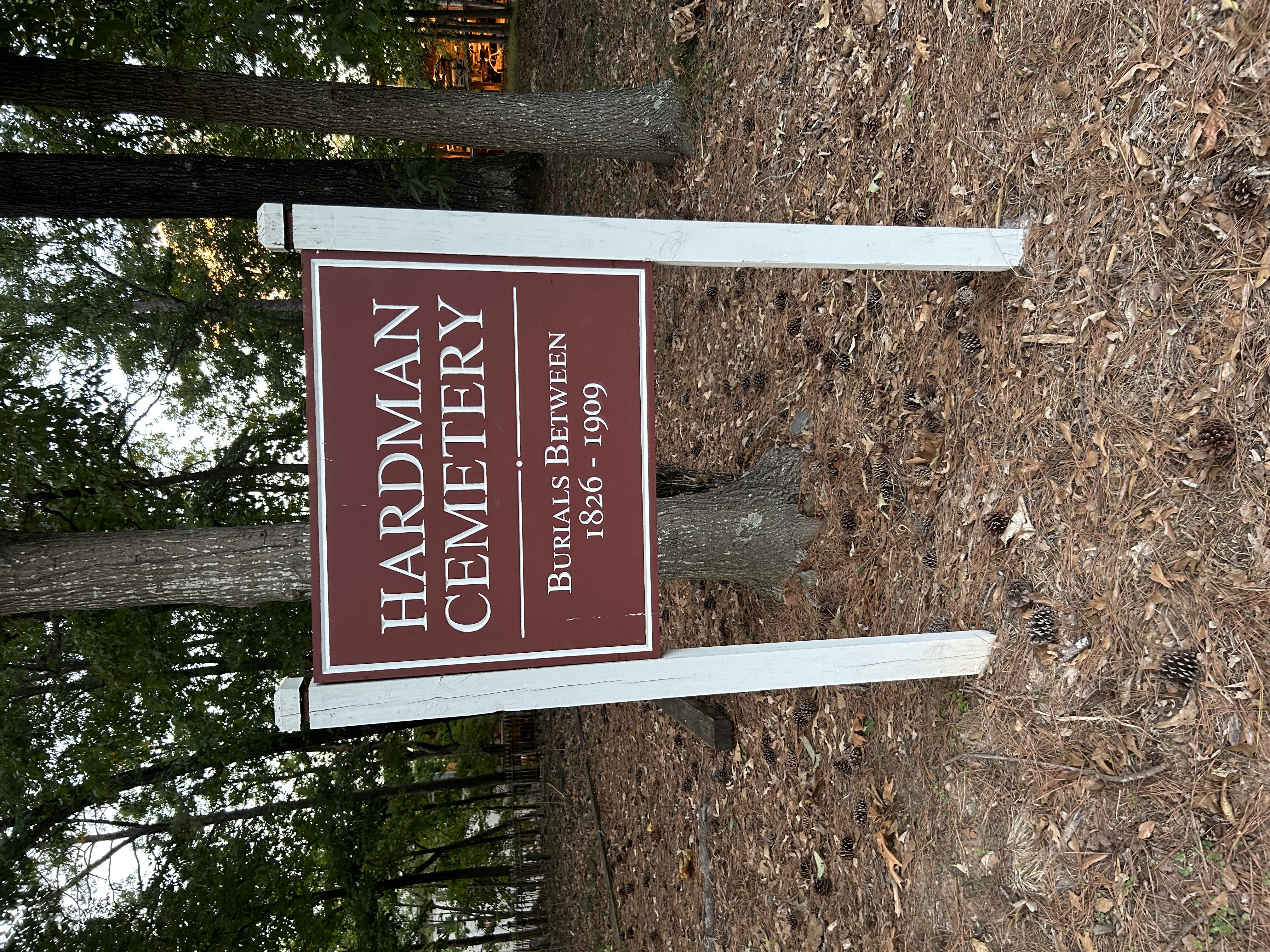
The cemetery holds significant historical value, containing graves of both white settlers and enslaved African Americans. It spans multiple important periods in American history, from the era of slavery through the Civil War and into the early 20th century. The earliest recorded grave is from 1825, belonging to Rody Harriet Hardman, who was a year and a half old when she died. The most recent burial is from 1909.
During the Civil War, in July 1864, the church adjacent to the cemetery served as a barracks and military field hospital for Union troops. It was staffed by Dr. Edward Shippen of Union Major General John M. Schofield's 23rd Corps. The cemetery's location was strategically important, being near the junction of Atlanta Road (now North Decatur Road) and Shallowford Road, which were key routes for military movements.
After the Civil War, the church's congregation moved south to Decatur. The cemetery, however, remained in its original location. In 1986, Emory University acquired the property as part of the purchase of an apartment complex.
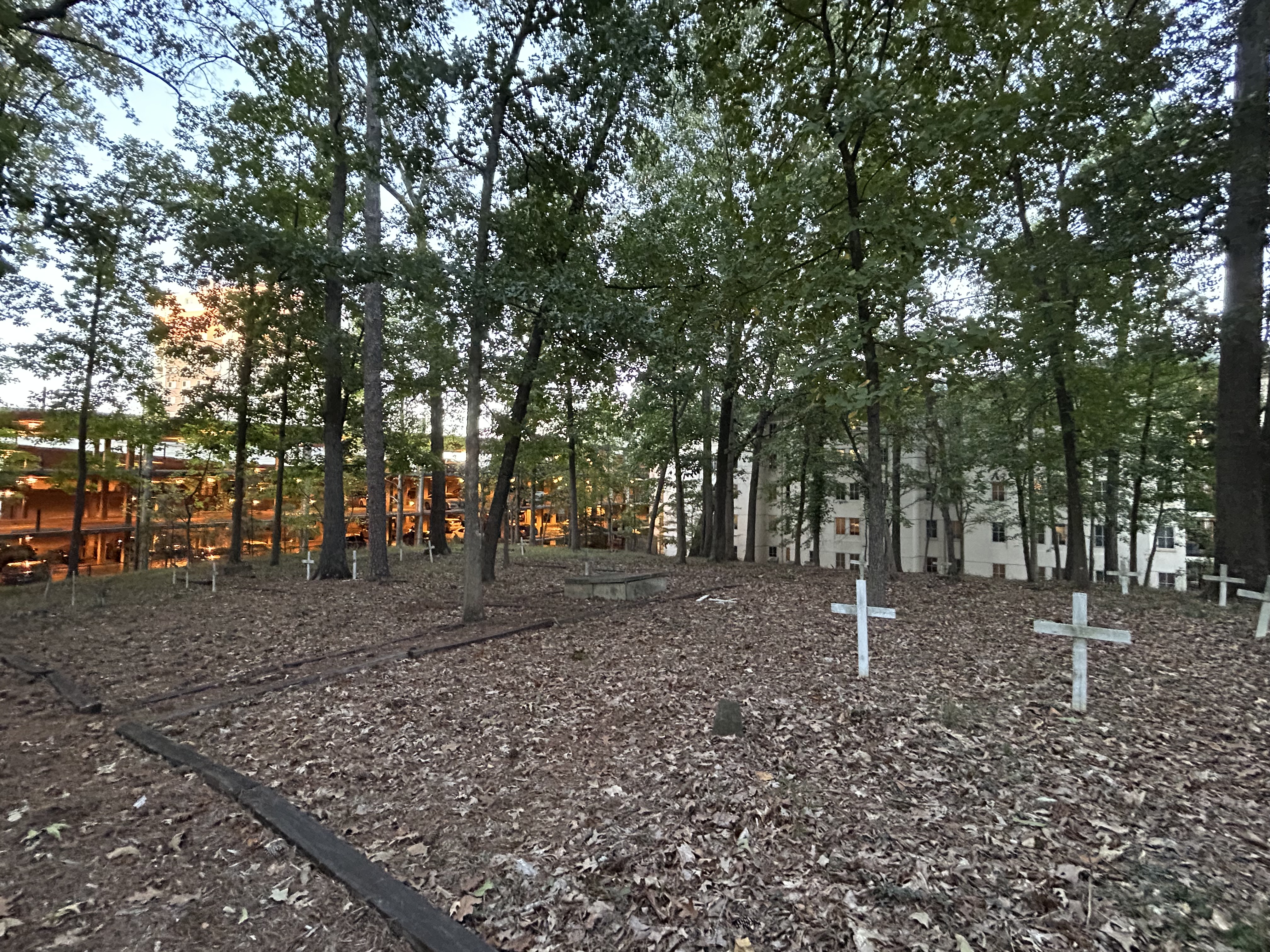
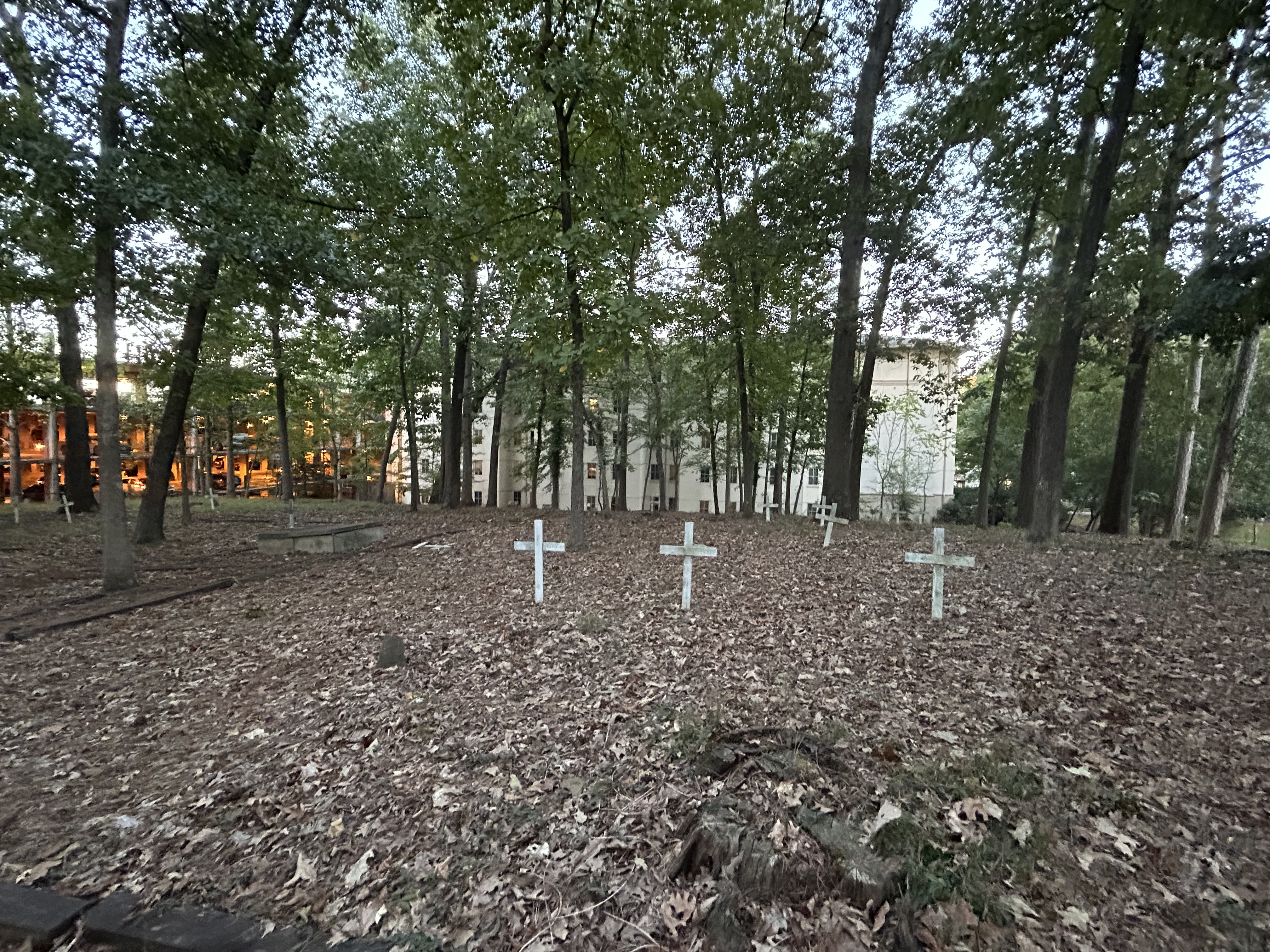
Today, the Hardman Family Cemetery exists as a historical site on Emory University's Clairmont Campus. It is surrounded by a parking deck, apartment building, and shuttle road. The cemetery is now owned by the DeKalb Historical Society, not Emory University, highlighting its recognized historical importance.
-
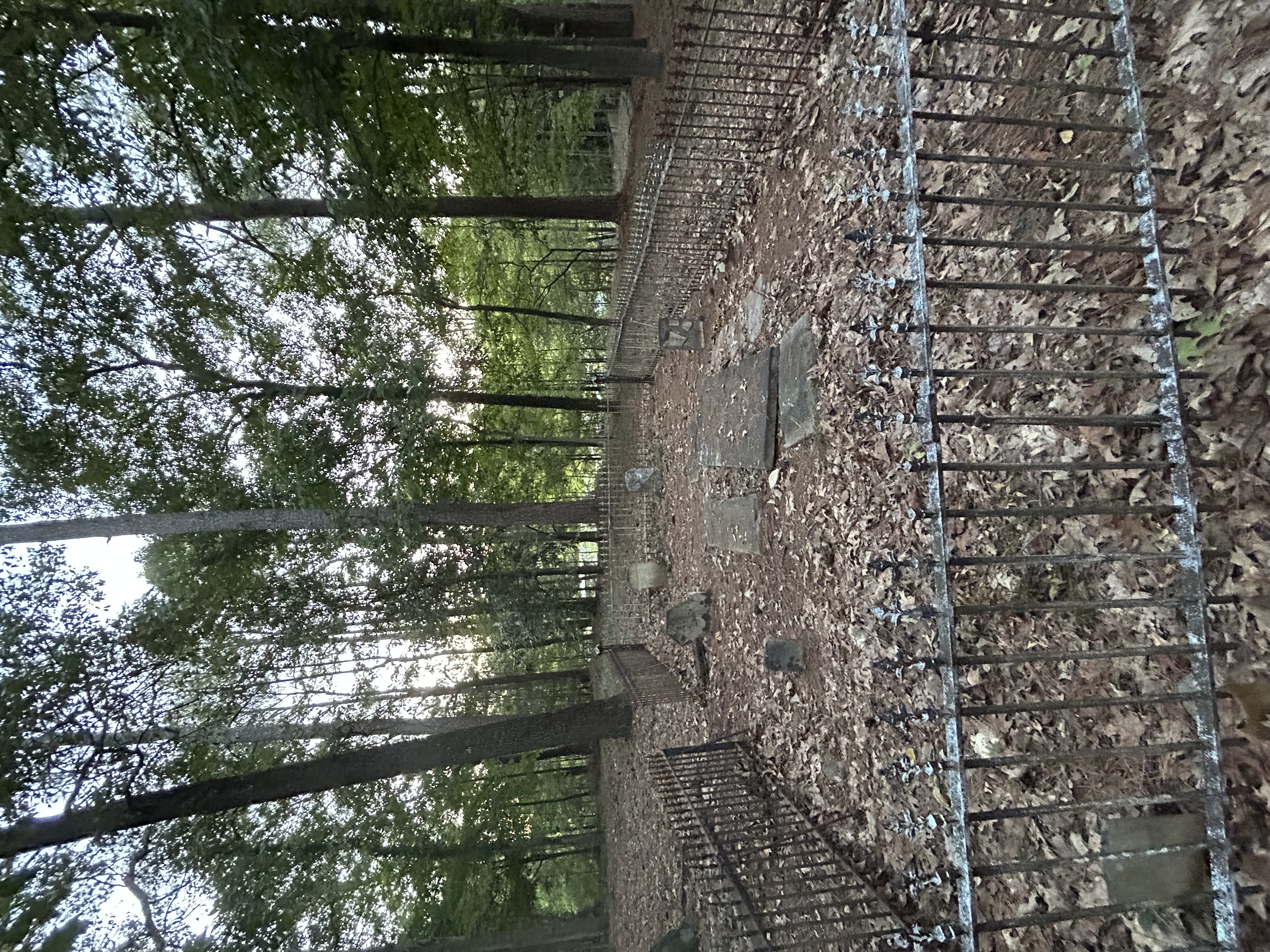
The Hardman Cemetery is a small burial site that covers a few dozen feet in area on Emory’s Clairmont Campus. It is enclosed by a protective barrier and surrounded by trees which offer a secluded and reflective atmosphere. It is tucked away and half-hidden, surrounded by a parking deck, apartment building, and shuttle road. The cemetery contains about fifty graves in varying conditions of wear. The cemetery consists of weathered stone grave markers, some of which bear inscriptions identifying the individuals buried there.
-
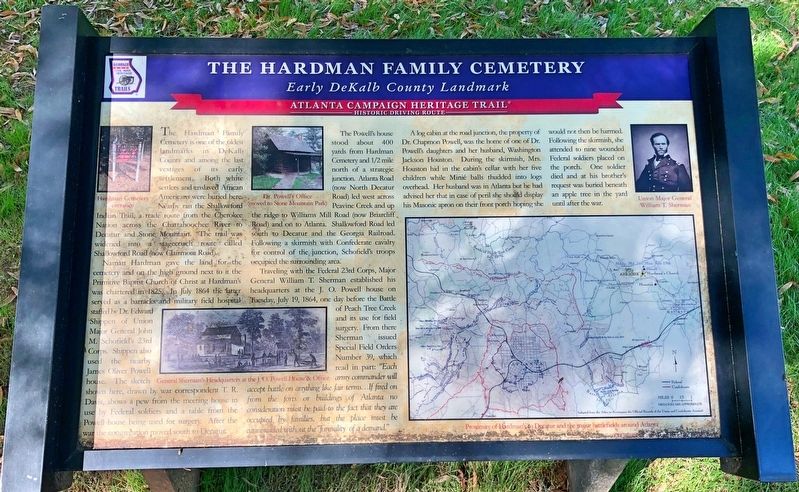
“The Hardman Family Cemetery is one of the oldest landmarks in DeKalb County and among the last vestiges of its early settlement. Both white settlers and enslaved African Americans were buried here. Nearby ran the Shallowford Indian Trail, a trade route from the Cherokee Nation across the Chattahoochee River to Decatur and Stone Mountain. The trail was widened into a stagecoach route called Shallowford Road (now Clairmont Road).
"Naman Hardman gave the land for the cemetery and on the high ground next to it the Primitive Baptist Church of Christ at Hardman's was chartered in 1825. In July 1864 the latter served as a barracks and military field hospital staffed by Dr. Edward Shippen of Union Major General John M. Schofield's 23rd Corps. Shippen also used the nearby James Oliver Powell house. The sketch shown here, drawn by war correspondent T. R. Davis, shows a pew from the meeting house in use by Federal soldiers and a table from the Powell house being used for surgery. After the war, the congregation moved south to Decatur.
"The Powell's house stood about 400 yards from Hardman Cemetery and 1/2 mile north of a strategic junction. Atlanta Road (now North Decatur Road) led west across nor Peavine Creek and up the ridge to Williams Mill Road (now Briarcliff Road) and on to Atlanta. Shallowford Road led south to Decatur and the Georgia Railroad. Following a skirmish with Confederate cavalry for control of the junction, Schofield's troops occupied the surrounding area.
Traveling with the Federal 23rd Corps, Major General William T. Sherman established his headquarters at the J. O. Powell house on Tuesday, July 19, 1864, one day before the Battle of Peach Tree Creek and its use for field surgery. From there Sherman issued Special Field Orders Number 39, which read in part: 'Each army commander will accept battle on anything like fair terms...If fired on from the forts or buildings of Atlanta no consideration must be paid to the fact that they are occupied by families, but the place must be cannonaded without the formality of a demand.'
"A log cabin at the road junction, the property of Dr. Chapmon Powell, was the home of one of Dr. Powell's daughters and her husband, Washington Jackson Houston. During the skirmish, Mrs. Houston hid in the cabin's cellar with her five children while Minié balls thudded into logs overhead. Her husband was in Atlanta but he had advised her that in case of peril, she should display his Masonic apron on their front porch hoping she would not then be harmed. Following the skirmish, she attended to nine wounded Federal soldiers placed on the porch. One soldier died and at his brother's request was buried beneath an apple tree in the yard until after the war.”
-
The Hardman Cemetery was not designed as a formal memorial but functioned as a family burial ground. It was likely maintained by the Hardman family themselves during the 19th century, with grave markers crafted by local stonemasons or artisans who were typical for rural cemeteries of that era.
-
1825
-
The Hardman Family funded the original cemetery, as it was created as a burial site for members of the family.
Position: 1090 (81 views)