Carnegie Hall
Item
- Legacies Classification
- Memorial Type
- Memorial Context
- Memorialized Subject
- Title
- Background and Context
- Physical Description
- Creator/Participating Person(s)
- Date created, installed or dedicated
- Historical Period
- Funded by
- Location: Institution, City, State
- Wikidata
- Learn More About this Subject
-
Memorial Structure
-
Named Building
-
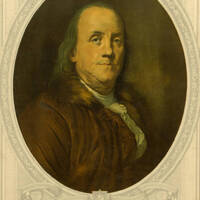
Carnegie, Andrew
-
Carnegie Hall
-
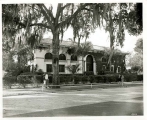
The College's first library, Carnegie Hall was constructed between 1908-1909 and dedicated on February 18, 1909. The 8,354- square-foot served many purposes including the college library, administrative offices, post office, bookstore, news bureau, and admissions office.
The building had two donors; the largest amount funded by philanthropist and industrialist Andrew Carnegie who gave a hefty donation to the college of $20,000. Carnegie, a Scottish immigrant who moved to the U.S. in 1848, worked his way to success in the steel industry, making him millions of dollars. Andrew was vocal about his enlightened perspective on race relations. Appearing in newspapers across the U.S., Carnegie remained firm in his belief of funding higher education for African Americans in hopes of integrating them into America’s industrial workforce. Some scholars have noted that his reasoning for advocating for Black education may have been for his own gain.
When the Homestead Strike of 1892 broke out at Carnegie’s steel mill in Pittsburgh, African American strikebreakers were used to replace laborers, and were paid a lower wage than their White counterparts.
Nevertheless, Carnegie formed a close friendship with Booker T. Washington, American educator and spokesman for Black Americans in the late 19th and early 20th century, after he donated to Tuskegee University in 1900.
-
The external structure of the two-story building is made of Florida sand-lime bricks with cement stone trimmings, and red clay tiles on the roof. The floors of the rooms are made of Indian red cement, and the decorating structures of the rooms are made of wood. Inside the hallway, a bronze portrait of Andrew Carnegie could be seen in the stairwell of the main entrance.
-
Carnegie, Andrew; Chase, Loring Augustus
-
February 18, 1909
-
Andrew Carnegie Foundation
-
Wenxian Zhang et al., Rollins Architecture: A Pictorial Profile of Current and Historical Buildings (Olin Library, 2009)
Position: 1043 (84 views)