Tom Keith Lynching Marker
Item
- Legacies Classification
- Memorial Type
- Memorial Context
- Memorialized Subject
- Title
- Background and Context
- Memorial Inscription
- Date created, installed or dedicated
- Funded by
-
Memorial Object
-
Plaque/Marker
-
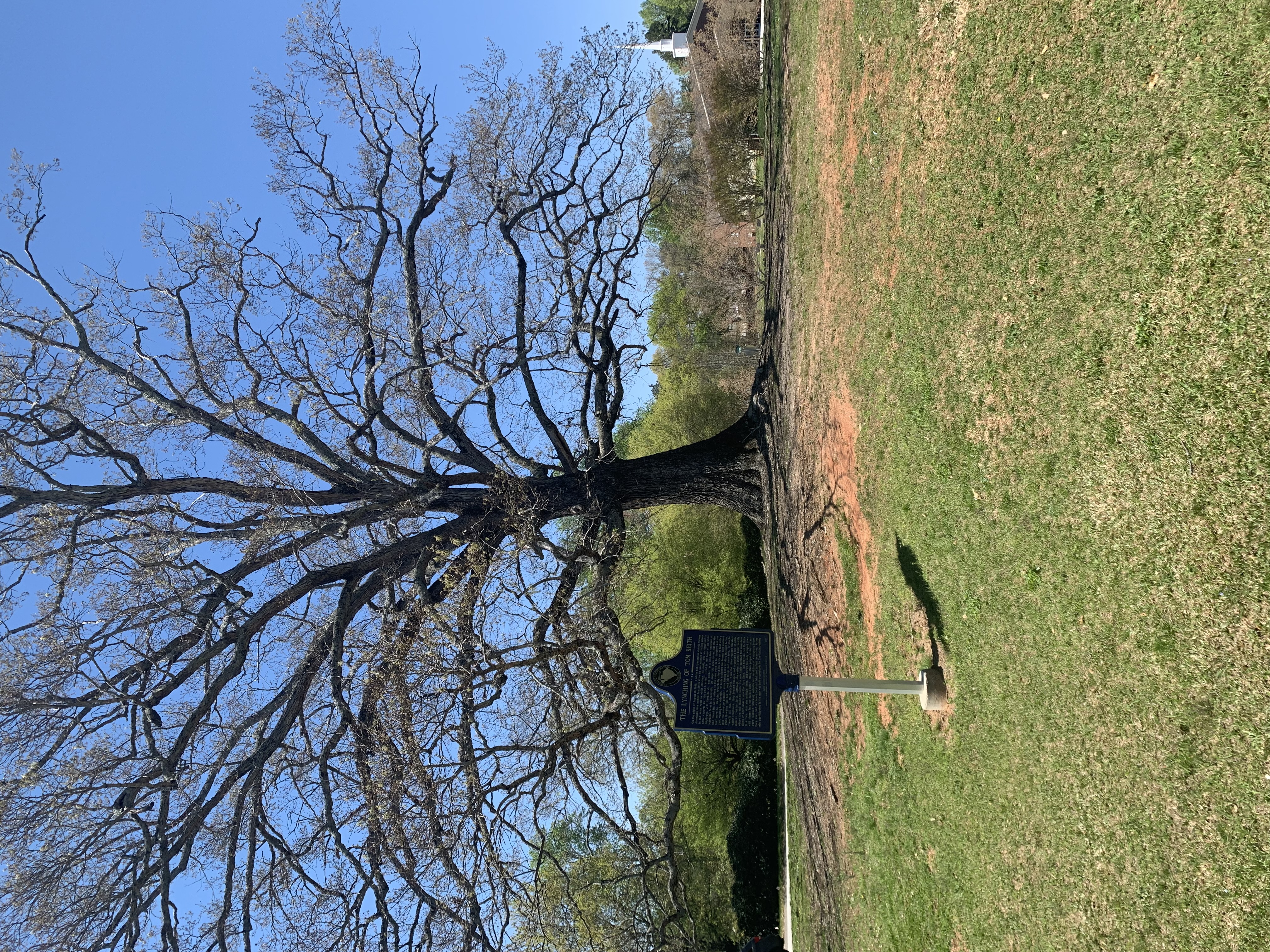
A marker placed to commemorate the lynching of Tom Keith
-
Tom Keith Lynching Marker
-
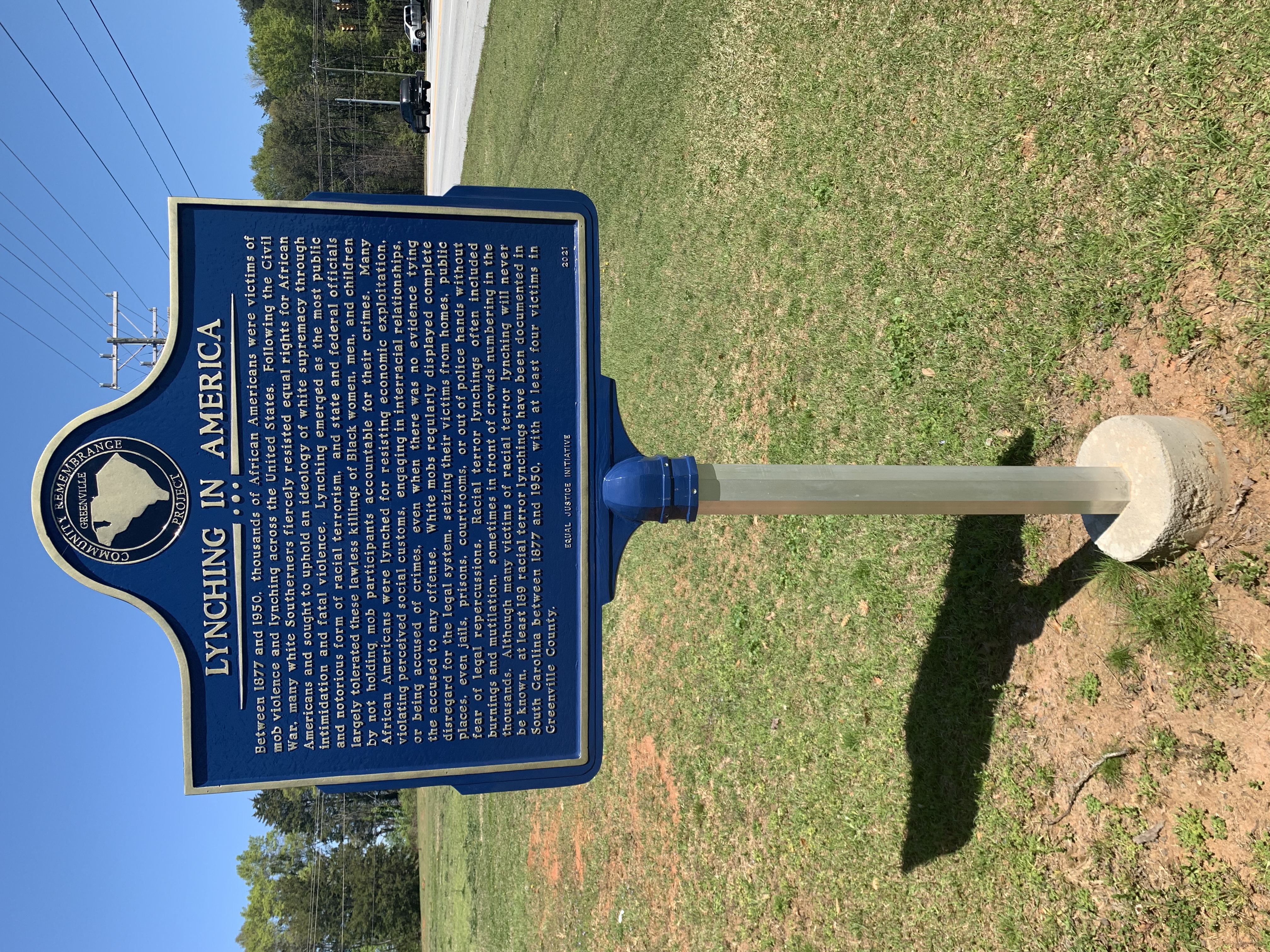
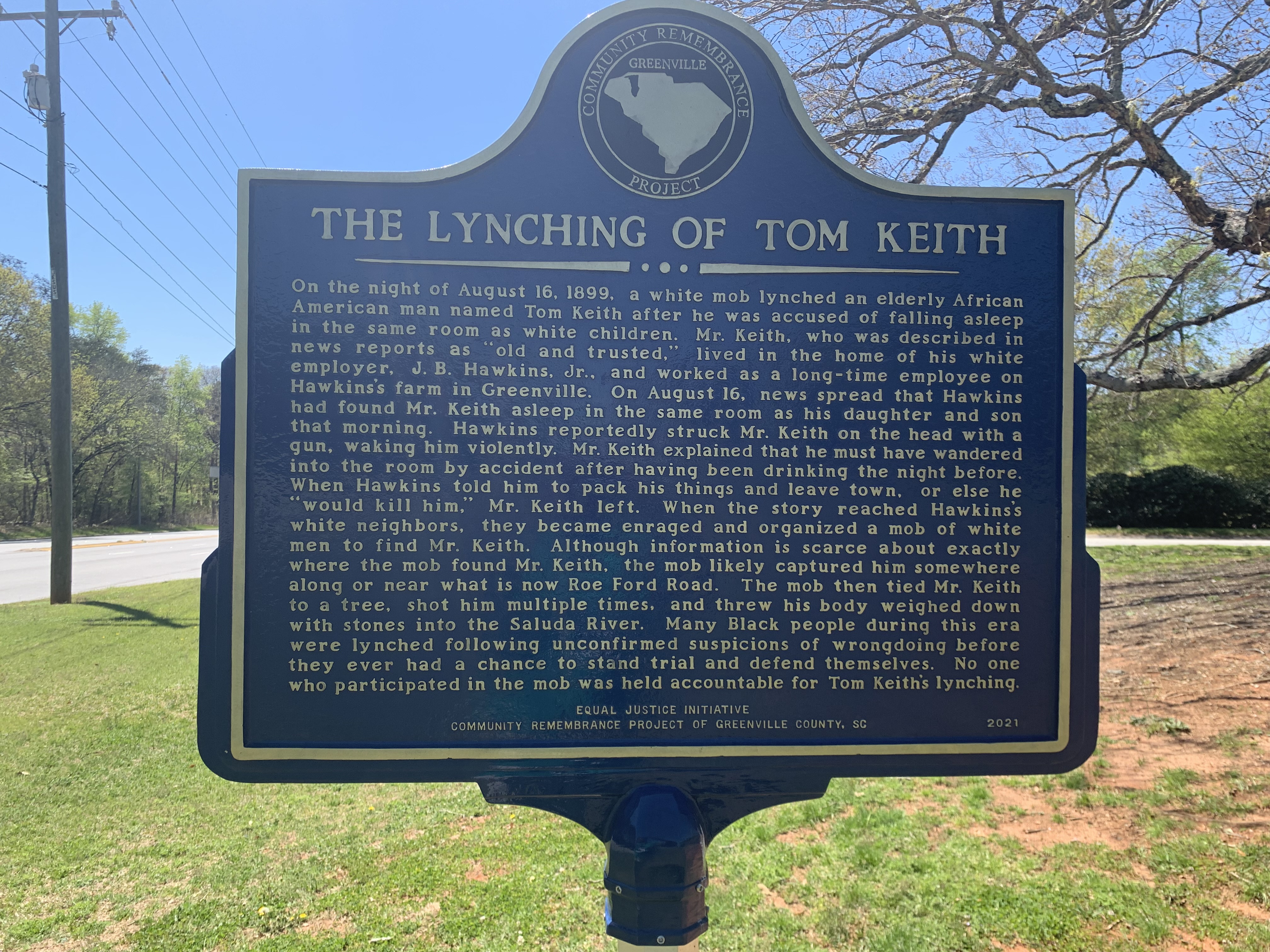
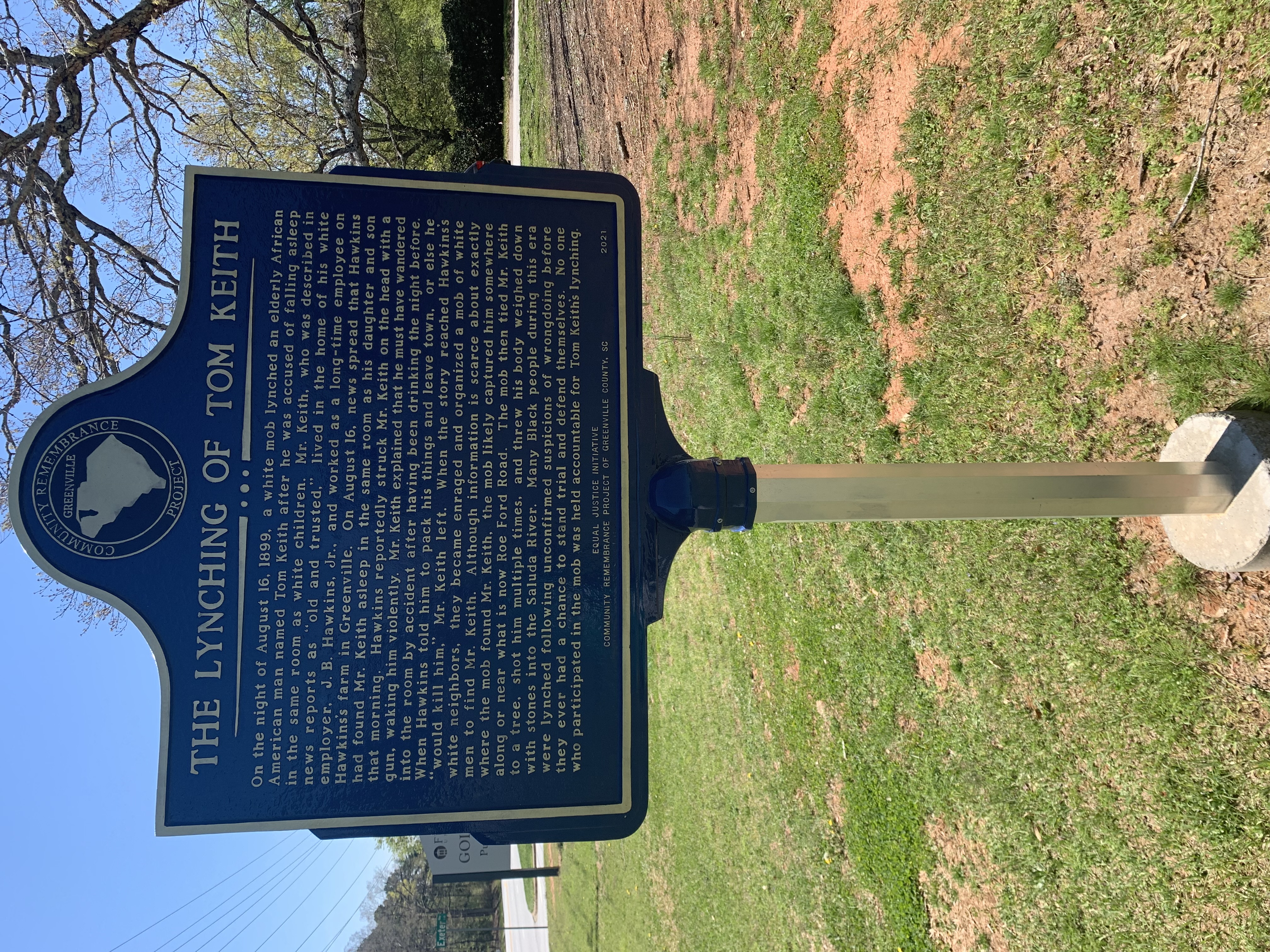
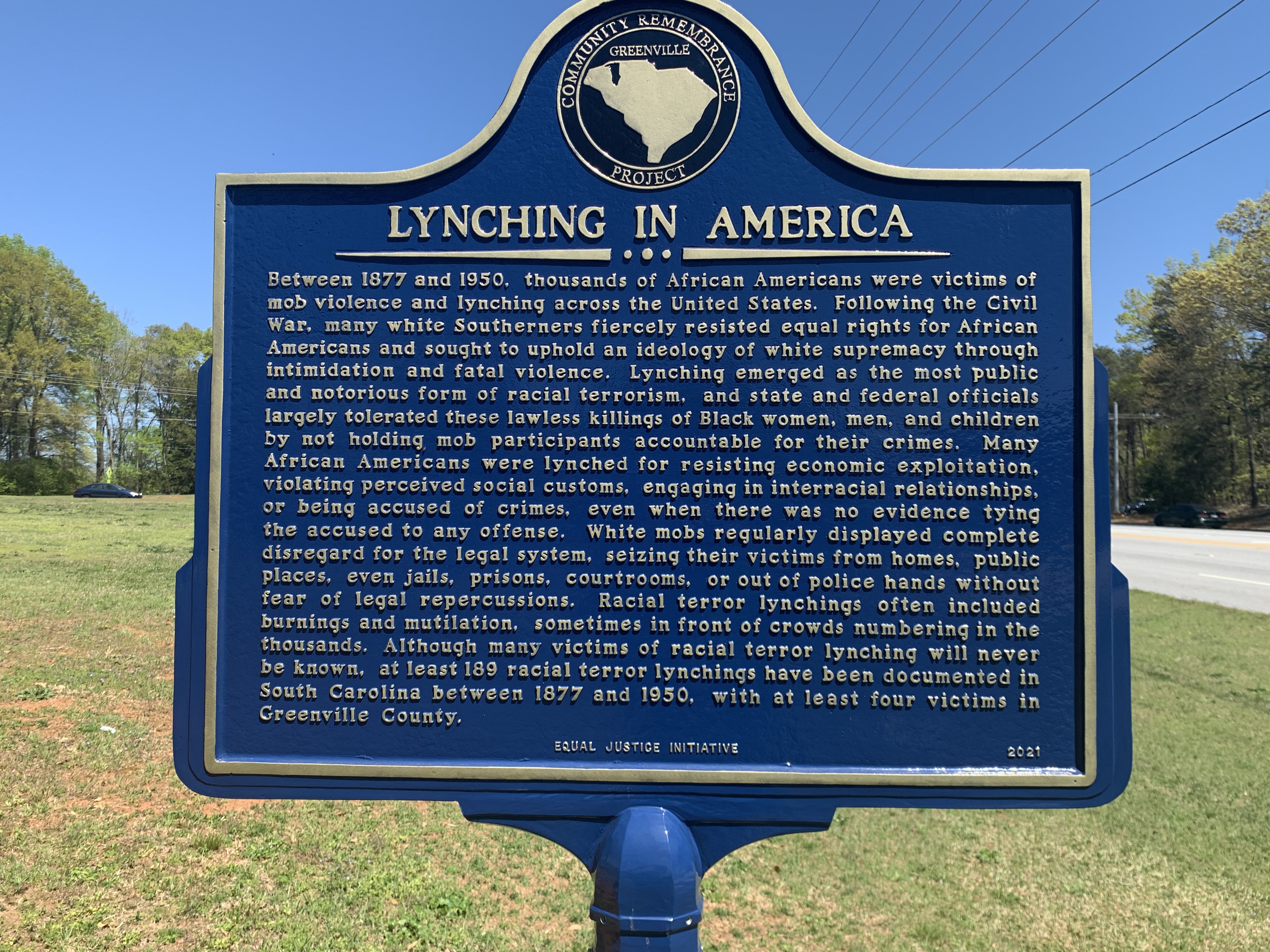
On November 20th, 2021, members of the Community Remembrance Project (affiliated with the Equal Justice Initiative in Montgomery, AL) installed this plaque to commemorate the lynching of Tom Keith. The marker is located on Furman property in front of a local church on 1101 Roe Ford Road in Greenville, South Carolina. The marker is two-sided, one side paying tribute to Tom Keith and the other side telling the storying of lynching in America. Tom Keith was lynched on August 16, 1899 by a white lynch mob. Mr. Keith was accused of falling asleep in the same room as white children and that was the “reason” for his lynching. A group of white men were livid by the claim of him sleeping in the same room as the white child, so they followed him, tied him to a tree, shot him many times, tied stones on him and threw him into the Saluda River. None of the men who were apart of the lynch mob were ever charged with the death of Mr. Keith.
In 2021 when the marker was erected the community came together to celebrate Tom Keith’s life and pay respect alongside the marker. There were people from Furman University, Council members, singers, and the pastor of the church that sits behind the marker.
-
Lynching in America
Between 1877 and 1950, thousands of African Americans were victims of mob violence and lynching across the United States. Following the Civil War, many white Southerners fiercely resisted equal rights for African Americans and sought to uphold an ideology of white supremacy through intimidation and fatal violence. Lynching emerged as the most public and notorious form of racial terrorism, and state and federal officials largely tolerated these lawless killings of Black women, men, and children by not holding mob participants accountable for their crimes. Many African Americans were lynched for resisting economic exploitation, violating perceived social customs, engaging in interracial relationships, or being accused of crimes, even when there was no evidence tying the accused to any offense. White mobs regularly displayed complete disregard for the legal system, seizing their victims from homes, public places, even jails, prisons, courtrooms, or out of police hands without fear of legal repercussions. Racial terror lynchings often included burnings and mutilation, sometimes in front of crowds numbering in the thousands. Although many victims of racial terror lynchings will never be known, at least 189 racial terror lynchings have been documented in South Carolina between 1877 and 1950, with at least four victims in Greenville County.
The Lynching of Tom Keith
On the night of August 16, 1899, a white mob lynched an elderly African American man named Tom Keith after he was accused of falling asleep in the same room as white children. Mr. Keith, who was described in news reports as "old and trusted," lived in the home of his white employer, J.B. Hawkins, Jr., and worked as a long-time employee on Hawkins's farm in Greenville. On August 16, news spread that Hawkins had found Mr. Keith asleep in the same room as his daughter and son that morning. Hawkins reportedly struck Mr. Keith on the head with a gun, waking him violently. Mr. Keith explained that he must have wandered into the room by accident after having been drinking the night before. When Hawkins told him to pack his things and leave town, or else he "would kill him," Mr. Keith left. When the story reached Hawkins's white neighbors, they became enraged and organized a mob of white men to find Mr. Keith. Although information is scarce about exactly where the mob found Mr. Keith, the mob likely captured him somewhere along or near what is now Roe Ford Road. The mob then tied Mr. Keith to a tree, shot him multiple times, and threw his body weighed down with stones into the Saluda River. Many Black people during this era were lynched following unconfirmed suspicions of wrongdoing before they ever had a chance to stand trial and defend themselves. No one who participated in the mob was held accountable for Tom Keith's lynching.
-
November 20, 2021
-
The Equal Justice Initiative and the Community Remembrance Project of Greenville County, SC
Position: 1362 (65 views)