Hodgson, Telfair
Item
- Connection to Legacies of American Slavery Database
- Name
- One-line bio
- Biography
- Date of Birth
- Date of Death
- Historical Period
- Related Organization(s)
- Employed By
- Wikidata Link
- Learn More About this Subject
-
Hodgson, Telfair
-
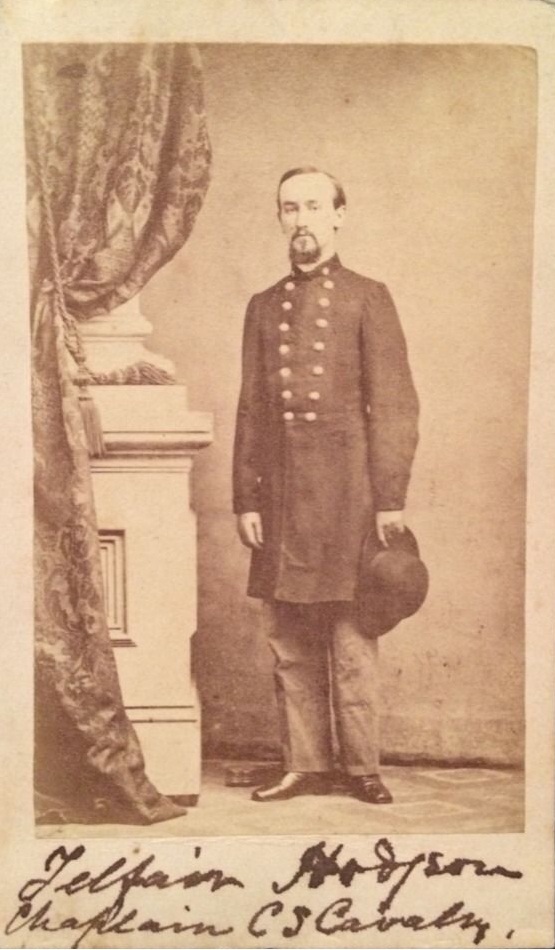
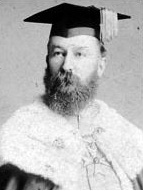
The Rev. Telfair Hodgson (1840-1893) was the third Vice-Chancellor of the University (1879-1890), served in the Confederate army as soldier and chaplain, came from a slave-owning Virginia family, and married into what had been one of the South's largest enslaving families.
-
The Rev. Telfair Hodgson (1840-1893) was third Vice-Chancellor of the University, serving from 1879-1890. His father, Joseph (1804-1888), a graduate of the University of Virginia, was a prominent merchant in Fluvanna, Va., who, with his family, enslaved seven persons in 1850. There is no evidence that Telfair Hodgson owned enslaved persons independently of his father, but as a male heir of the slave-owning household, he was a young master and enslaver in his own right.
Telfair Hodgson graduated from Princeton in 1859, and subsequently began studying for the ministry at the General Theological Seminary. He withdrew from there upon the formation of the Confederacy and joined the Virginia Infantry, later transferring to serve in an Alabama unit under the command of his brother and rising to the rank of major. In 1864, after ordination in the Confederate Episcopal church, he served as a chaplain in the southern forces.
In 1865, Hodgson married Frances Glen Potter of Savannah, daughter of James Potter (1793-1862), one of the titans of Georgia’s coastal Rice Kingdom. Prior to emancipation, he enslaved 500 or more on his several plantations near Savannah. One historian has called the Potter empire “a vast water-driven machine to make rice,” and Potter himself a trafficker “in the currency of money, slaves, and land.” A prominent and outspoken pro-slavery advocate, Potter pledged a pre-war subscription of $10,000 to the University of the South, which his son-in-law Telfair and daughter arranged to fulfill in 1874. The University used the money to construct the Hodgson Library. It was dedicated in 1878 as a memorial to their deceased daughter, and later converted to an infirmary and hospital (today it is a dormitory).
Telfair Hodgson arrived in Sewanee in 1878 as dean of the Theology Department and rose to Vice-Chancellor the next year. Hodgson brought with him a voice for white supremacy; in an 1867 sermon he bemoaned the passing of the pre-war South, with its “Men of education, and women of refinement” and with them the charm and generosity of southern “hospitality.” He likewise blamed the ruin of the white South on the freed slaves, who “are of no use to the social community at the South” and “unhesitatingly appropriate the effects of the white population.”
Hodgson is credited with bringing lifesaving financial management to the University during his vice-chancellorship, but a considerable part of that stability was drawn from the reserve of wealth from his marriage to Frances Potter, which was a product of her father's pre-Civil War rice and slave empire. In addition to the library/hospital, Hodgson’s wife, Frances, who historian Samuel Williamson says was “Generous to the university at every point,” gave the money to construct St. Luke’s Chapel (1907; currently a concert hall) as a memorial to her late husband.
-
March 14, 1840
-
September 11, 1893
Position: 136 (265 views)
Related Items
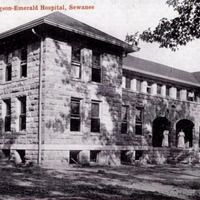 Hodgson Hall; a dormitory dedicated to Telfair Hodgson
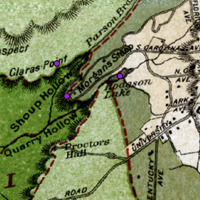 Hodgson Lake; a lake dedicated to Telfair Hodgson
 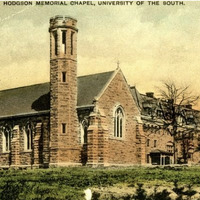 St. Luke's Chapel; a chapel building dedicated to Telfair Hodgson
Hodgson Hall; a dormitory dedicated to Telfair Hodgson
Hodgson Hall; a dormitory dedicated to Telfair Hodgson Hodgson Lake; a lake dedicated to Telfair Hodgson
St. Luke's Chapel; a chapel building dedicated to Telfair Hodgson
Hodgson Hall; a dormitory dedicated to Telfair Hodgson
Hodgson Hall; a dormitory dedicated to Telfair Hodgson Hodgson Lake; a lake dedicated to Telfair Hodgson  Painted portrait of Telfair Hodgson St. Luke's Chapel; a chapel building dedicated to Telfair Hodgson