The Mound (former site of Franklin Hall); a green knoll honoring the University's Confederate past
Item

">


- Legacies Classification
- Memorial Type
- Memorial Context
- Memorialized Subject
- Title
- Background and Context
- Physical Description
- Memorial Inscription
- Creator/Participating Person(s)
- Date created, installed or dedicated
- Date Modified
- Historical Period
- Funded by
- Location: Institution, City, State
- Learn More About this Subject
-
Memorial Place
-
Space on Campus
-
Clayton, Henry DeLamar
-
The Mound (former site of Franklin Hall); a green knoll honoring the University's Confederate past
-
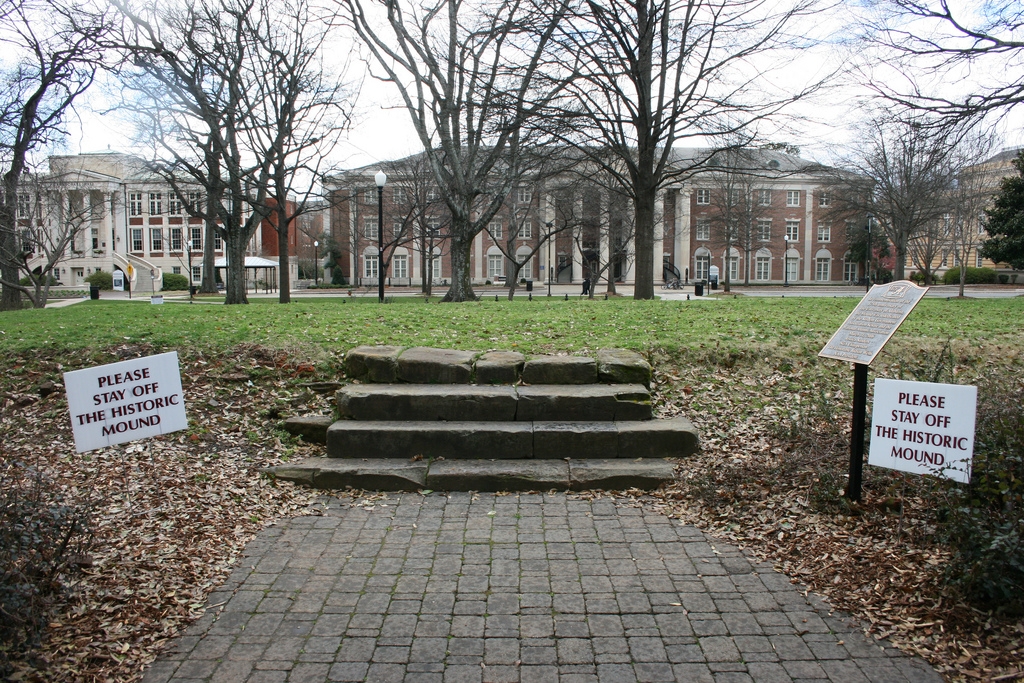
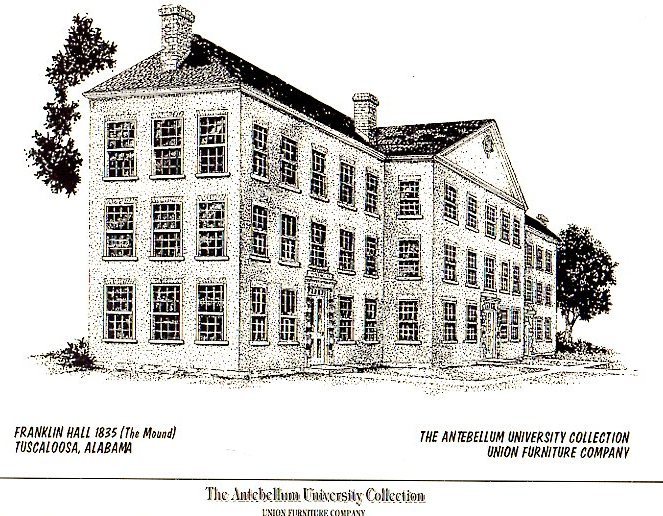
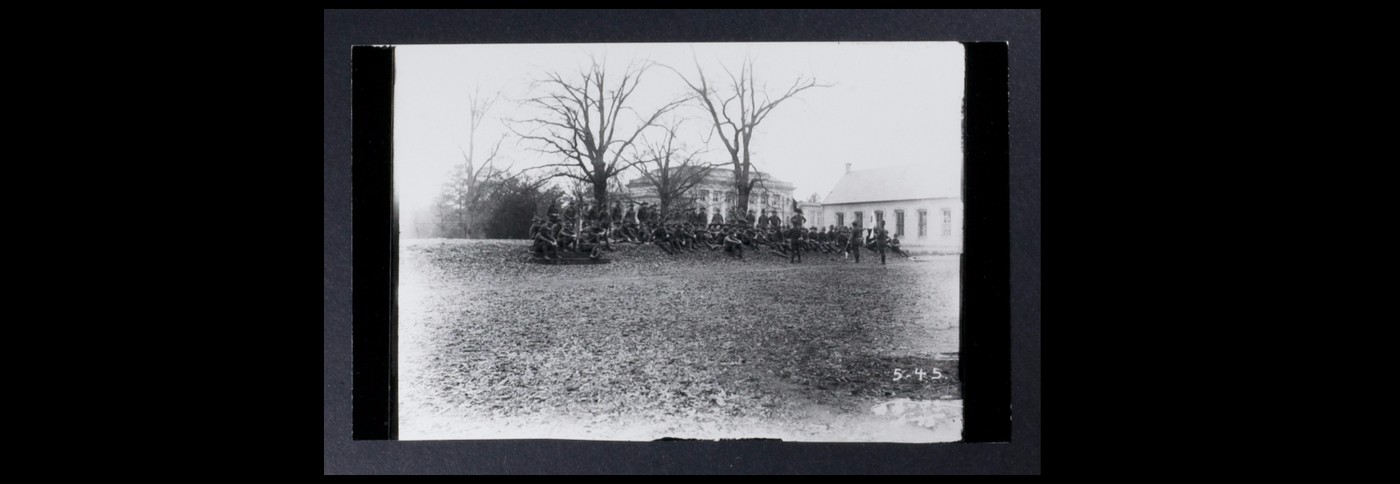
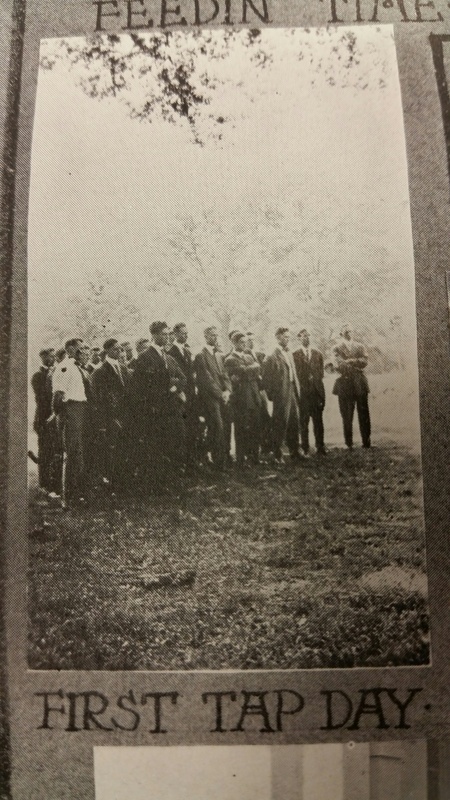
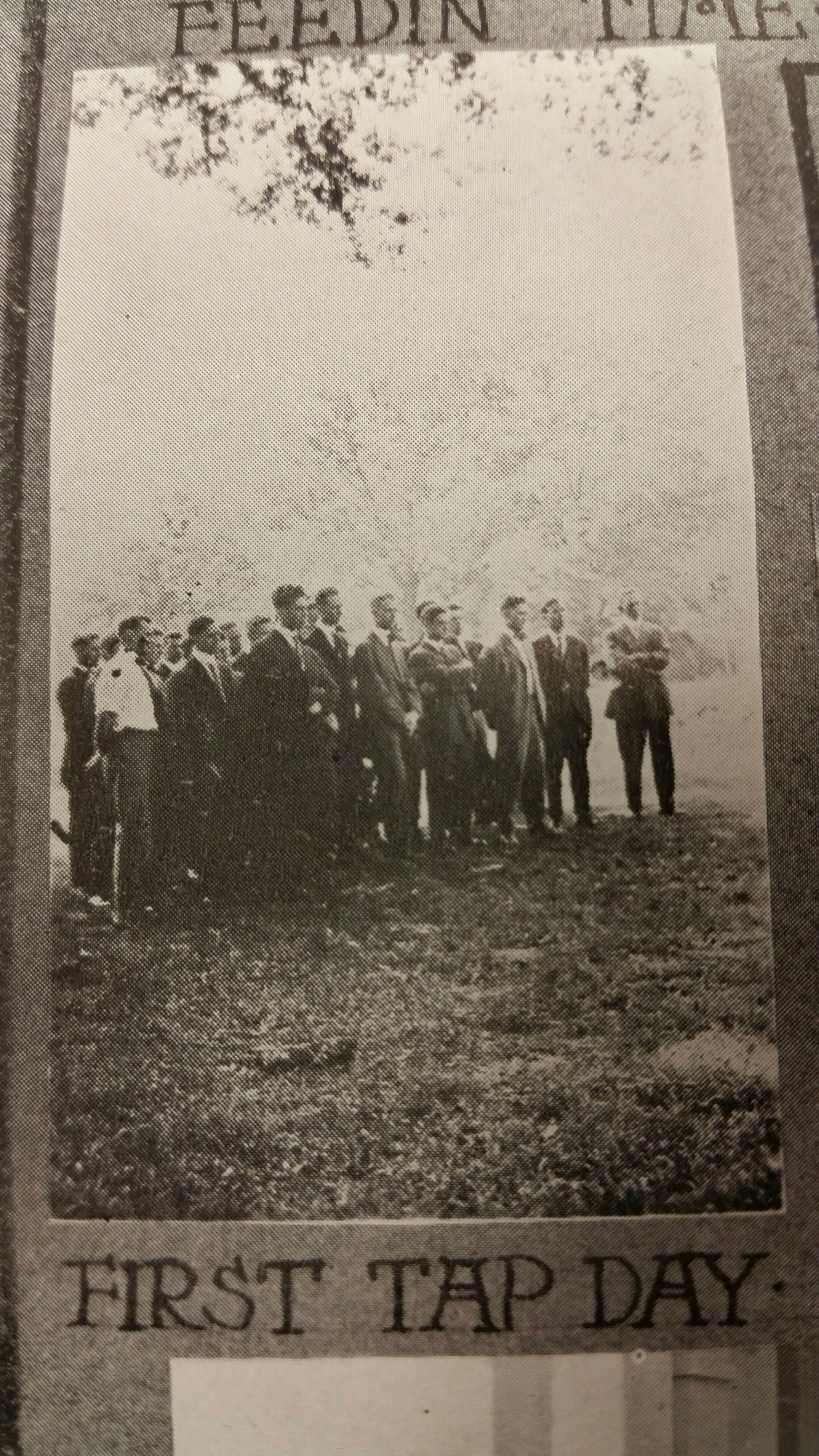
"The Mound," as it is known today is the former site of Franklin Hall, a dormitory on the University's antebellum campus, first erected in 1835. It was designed by architect William Nichols, who designed many antebellum campus buildings. There are records of enslaved people working and sleeping in this building, and it also served as a barracks for Confederate officers during the Civil War. The building was destroyed along with most other campus buildings during the Union raid on the campus on April 4, 1865. The subsequent reconstruction of the campus was funded by the U.S. Congress in response to the University's plea for compensation for their destroyed buildings. Then current UA President Henry Clayton requested that the remaining piles of destroyed buildings on the University Quadrangle be preserved to "remain as historic monuments". It seems he wanted to leave them as a reminder of the War's destruction to future students while painting the University's involvement in the conflict as a military institution in a heroic light. This idea was well received by students and faculty alike. In 1910, despite alumni and student protests, all other mounds were removed or built on top of, but Franklin Hall was allowed to remain, out of respect for the Confederate legacy attached to it. Around that same time, the tradition of using The Mound as a place for "tapping" ceremonies for induction into various honorary societies informally began. As time went on, these traditions grew into more official ceremonies of the University and still continue on a yearly basis today. In 1981, a historical marker was added by the Alabama Historical Association, officially designating the Mound as a monument. In addition to the tapping ceremonies, a more recent use of the Mound is that on home football gamedays, the University's Million Dollar Band trombone section uses the Mound as a warm-up spot before performing in a pep rally. Other than for these specific uses, it is discouraged for anyone to walk on the Mound, which is made clear by a sign that reads "Please stay off the historic Mound". The memorial has been treated with respect as a revered piece of campus history since its creation as an informal and later more official monument. While still respected, most students today do not know exactly why the Mound is so important. The historical marker only states that it contains the remains of an antebellum campus building destroyed in the Union raid. It does not mention anything about slavery or the Confederacy.
-
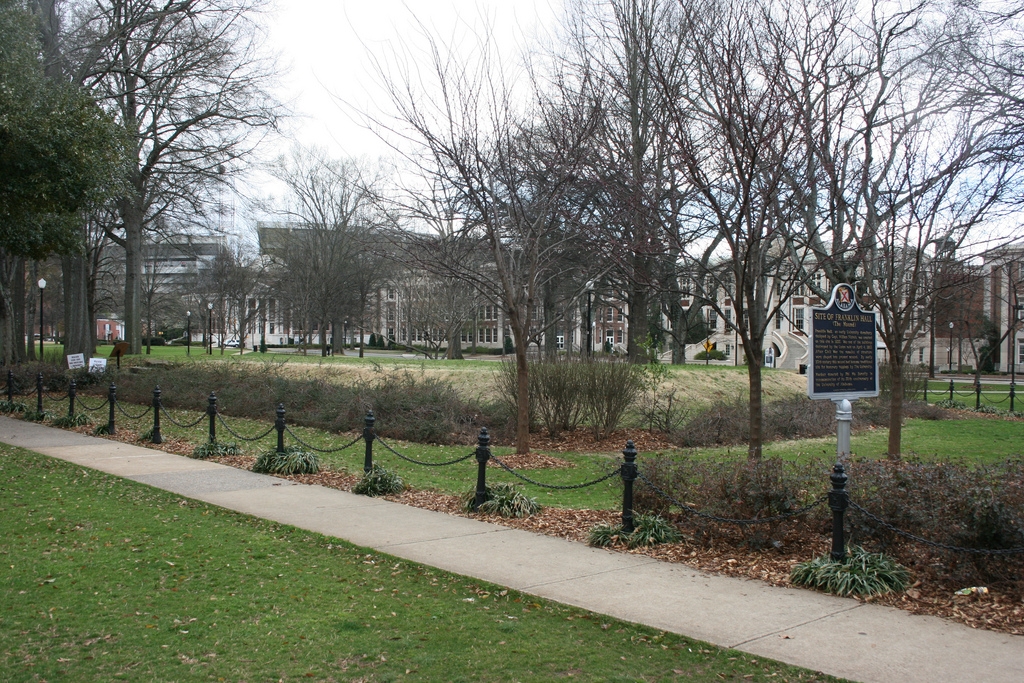
The Mound is a raised patch of land that is roughly 30ft by 90ft which sits on the northeast quadrant of the University of Alabama Quadrangle. It contains the ruins of the antebellum dormitory Franklin Hall, including brick and other rubble and debris. It is possible that remnants of objects that were in the building such as books or furniture might be contained within the Mound as well, since another previously existing mound, that of Madison Hall, was excavated by University archaeologist Jerry Oldshue, and remnants of several items including books, a whiskey bottle, and a desk were found. The Mound is neatly landscaped, with a flat top and covering of grass to match the surrounding area. There is also a set of stone stairs meant to represent the entrance of the original building. A black, chained fence surrounds the monument. The upkeep and protection of the Mound communicates that it is a valued piece of campus history.
-
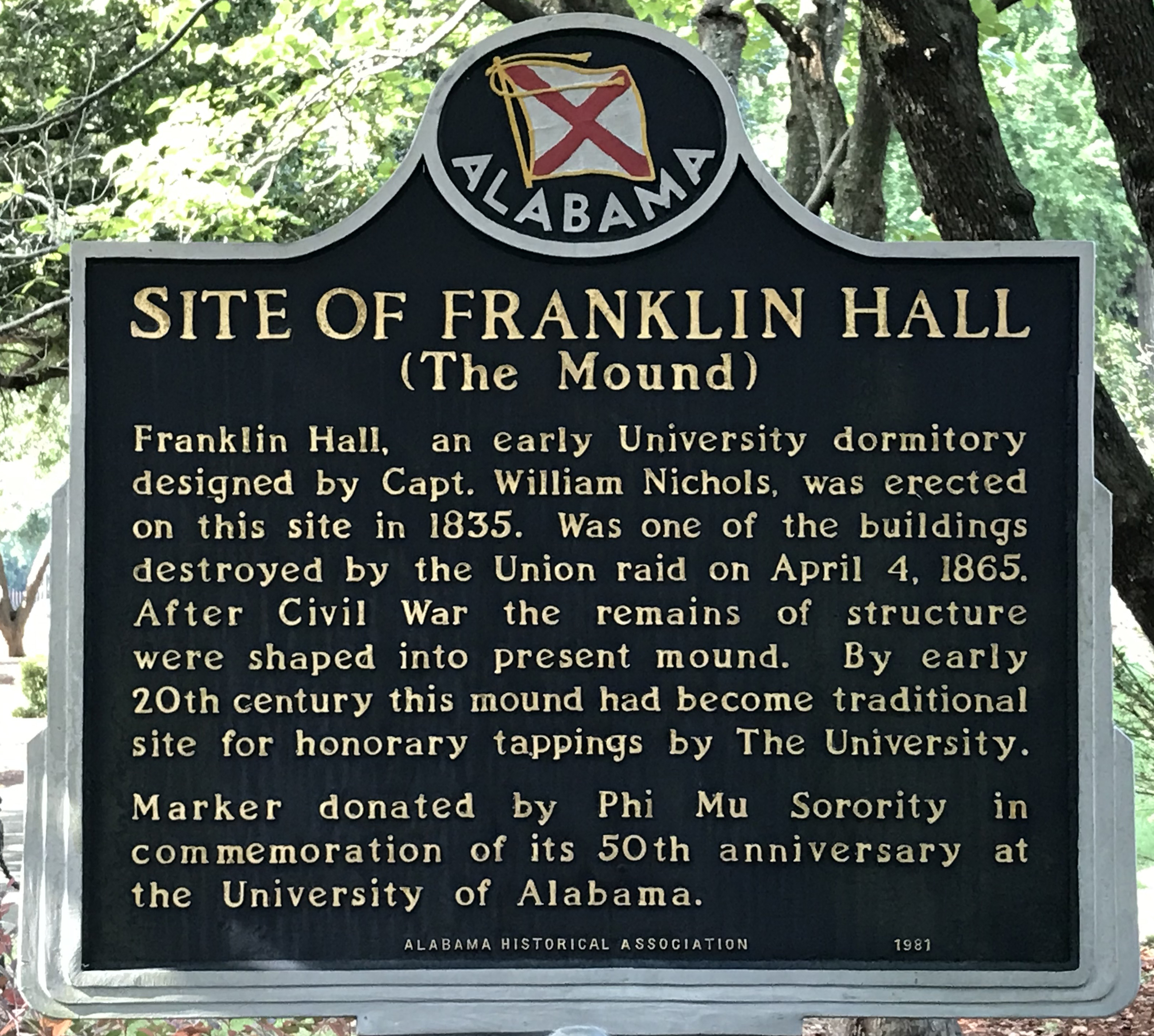
Site of Franklin Hall (The Mound)
Franklin Hall, an early University dormitory designed by Capt. William Nichols, was erected on this site in 1835. Was one of the buildings destroyed by the Union raid on April 4, 1865. After Civil War the remains of the structure were shaped into present mound. By early 20th century this mound had become traditional site for honorary tappings by The University.
-
Clayton, Henry DeLamar
-
1887
-
1981
-
2006
-
United State Congress
-
University of Alabama Trustees
-
Alabama Historical Association
-
Robert Oliver Mellown, The University of Alabama: A Guide to the Campus and Its Architecture (Tuscaloosa: University of Alabama Press, 2013).
Position: 12532 (5 views)